Hey there, fellow kitchen gear lovers! Let’s cut to the chase: if you’ve got a single handle polished pressure cooker sitting on your counter right now, you’ve probably stared at it mid-stovetop cook and thought, “Can I actually make omelets in this thing without messing it up?” Spoiler alert: you totally can—no fancy culinary degree required here. As someone who’s been selling these bad boys for a few years now, I’ve heard every question under the sun about pressure cookers, and this one’s way more common than you’d think. Today, I’m breaking down the science, the hacks, and why this small, sleek machine is actually perfect for fluffy, even-cooked omelets (way better than that nonstick pan that burns the edges half the time). Single Handle Polished Pressure Cooker

First, let’s get the basics out of the way for anyone who’s still new to pressure cookers—even a single handle polished model works the same core way as the big, bulky ones your grandma used to use. It traps steam inside, which pushes the internal pressure up to around 15 psi (pounds per square inch) for most standard models. That increased pressure does a few key things that make it a game-changer for omelets: it lowers the boiling point of water (so your eggs don’t overcook on the outside before the inside sets) and speeds up even heat distribution, no hot spots to char your veggies or cheese. Wait, hold up—isn’t pressure cooking for soups and roasts, not delicate eggs? That’s the myth we’re busting right now. The key here is that you’re not using high pressure the entire time, or even at full blast. We’re talking low-pressure, short bursts here, not 20-minute chicken thighs. That’s the sweet spot for eggs, which are super sensitive to heat—they go from runny to rubber faster than you can say “batter.”
Let’s talk about why a single handle polished pressure cooker specifically is great here, not just any pressure cooker. The single handle design isn’t just for looks (though let’s be real, that polished stainless steel finish makes your kitchen look way less cluttered than a bunch of gadgets). The handle locks the lid tight, creating that consistent steam seal you need, no leaks (which would mess up the pressure, obviously). And because they’re smaller—our single handle models are usually 3 or 6 quarts, perfect for 1-2 people—there’s less space for uneven steam, so your omelet cooks evenly from edge to center. I’ve seen so many people skip pressure cookers for eggs because they think it’s too much work, but the single handle’s one-button pressure release (most of our models have a quick-release for low heat too) makes it way simpler than flipping a omelet in a wobbly pan on a gas stove.
Now, the science part—let’s get nerdy for a sec, no stuffy textbooks, promise. Regular stovetop omelets work by direct heat from the pan’s bottom, which means the bottom layer of egg cooks way faster than the top, so you have to hover over the pan, scraping the edges to keep them from burning. Pressure-cooked omelets? They cook via moist heat from the trapped steam, which surrounds the egg mix evenly. That means no burnt edges, no runny middle if you time it right. Eggs are mostly water (like 75%, fun fact), so when you heat them, the proteins unfold and link together to set. At normal atmospheric pressure, water boils at 212°F (100°C), so your eggs cook at that temp. In a pressure cooker, 15 psi pushes the boiling point up to 250°F (121°C), but like I said earlier, we don’t crank it to full pressure for omelets. Most single handle polished models have a “low pressure” setting, which is around 5-7 psi, so the boiling point drops to about 225°F (107°C)—that’s the ideal temp for eggs, right between runny and fully set, so they stay fluffy, not dense.
Wait, but how do you actually do it? I’ve tested this a hundred times with our own single handle models, so I’ve got a go-to method that works every time, no fails. First, prep your filling: chop up some spinach, dice a bit of onion, shred a handful of cheese, whatever you like—just make sure it’s not too watery (no overripe tomatoes, that’ll make your omelet soggy). Next, the egg mix: 2-3 eggs, a splash of milk or even water (adds fluff!), a pinch of salt and pepper, whisked until just combined—don’t over-whisk, that makes bubbles that get tough when cooked.
Now, the pressure cooker setup. This is where people mess up: if you just pour the egg mix straight into the pot, it’ll stick. Grab a small, oven-safe ramekin (or even a muffin tin cup works, if you’re making mini omelets), spray it lightly with nonstick spray, or rub a tiny bit of butter on it. Pour your egg mix about ¾ full into the ramekin, add your filling (cheese first, so it melts, then veggies on top—no overstuffing, that makes it hard to set), and cover with a small piece of aluminum foil to keep steam out. Then, add 1 cup of water to the bottom of your single handle polished pressure cooker—this creates the steam we need, so don’t skip that step! Put a steamer rack inside (most of our models come with one, perfect fit for ramekins), set the ramekin on the rack, lock the lid with that single handle (listen for that click, it’s a satisfying little sound), and set the pressure to LOW. Cook for just 3 MINUTES. That’s it. Three minutes, no more. If you go longer, you’ll get rubbery eggs, I promise.
After 3 minutes, quick-release the pressure—twist that single handle to open the valve, let the steam escape super fast, so you don’t overcook the eggs. Unlock the lid, pull out the ramekin, let it sit for 30 seconds, then flip it onto a plate. That’s a fluffy, perfect omelet, no burnt edges, no flipping required. I’ve even made breakfast for my family with this method using the 6-quart single handle model, just 4 ramekins at once—way faster than making 4 separate pan omelets.
Wait, but can you make a big, folded omelet, not just a ramekin one? Yeah, you totally can, as long as you use a small, flat heat-resistant dish that fits inside your pressure cooker. Just make sure the dish is tall enough so the eggs don’t rise over the edges, and you’ll follow the same low-pressure, 3-minute rule. I tried this last week for a brunch, made a big Western omelet in a 8-inch ceramic dish, and it came out so even—no soggy middle, the ham was fully cooked, the eggs were light. Way better than the one I made on the stovetop that same day.
Now, let’s address the elephant in the room: common mistakes people make when trying omelets in a pressure cooker. First, too much heat/pressure. A lot of folks think you need high pressure to cook, but for eggs, it’s a turnoff—you’ll end up with dense, rubbery eggs that taste like they were microwaved (which, let’s be real, is the opposite of a good omelet). Second, not adding water to the bottom of the cooker. No water = no steam = direct heat, same as a pan, which is exactly what we’re trying to avoid. Third, overstuffing the omelet. If your filling is more than your egg mix, it’ll weigh the eggs down, so they won’t set evenly. Stick to ¼ cup of filling for every 2 eggs, that’s the sweet spot.
Another big question: does using a single handle polished pressure cooker affect the omelet’s taste? Let’s be honest, the finish is just stainless steel, so no, it doesn’t add any weird metal taste (unlike some cheaper pressure cookers we’ve tested, yuck). The polished surface is actually super easy to clean—just wipe it down after use, no scrubbing burnt eggs off like you do with a pan. And the single handle design? It’s way more ergonomic than those bulky side handles, so locking the lid and opening the pressure release is way easier, even if you’ve got small hands or are in a hurry in the morning.
I’ve seen so many customers come to us saying they bought a pressure cooker for soups, then got frustrated because they couldn’t make eggs, so they used it once and stuck it in a cabinet. That’s such a waste, because our single handle models are perfect for quick, healthy breakfasts, not just weeknight stews. Omelets take 5 minutes total from start to finish—way faster than waiting for a pan to heat up, and you don’t have to stand there stirring the whole time. You can prep your eggs while the pressure cooker heats up, then set a timer and go make coffee. That’s a win for anyone who’s tired of rushing to get breakfast on the table before work.
Wait, what about dietary stuff? If you’re vegan, you can swap eggs for a plant-based mix (soy milk, chickpea flour, a pinch of turmeric for color) and make the exact same recipe—just add a minute or two, since plant-based mixes cook a bit slower. And if you’re gluten-free, this method is totally safe, no cross-contamination if you clean your ramekin properly. It’s a versatile little machine, way more than just a one-trick pony for soups.
Let’s do a quick real-test story from a customer of ours, to prove this isn’t just a random tip. Sarah, a teacher who bought our 3-quart single handle polished pressure cooker last month, messaged me last week saying she was skeptical at first, but tried the omelet method for her 7-year-old who refuses to eat burnt eggs. She said it was the first time her kid ate a whole omelet without complaining, and she saved 10 minutes on breakfast every morning. That’s the kind of win we love to see—kitchen gear that actually makes life easier, not just adds to the clutter.
Now, let’s talk about maintenance, because no one wants a pressure cooker that breaks after a few uses. Our single handle models have a polished stainless steel exterior, which resists stains and rust, unlike nonstick pressure cookers that scratch easily. The single handle is made of heat-resistant plastic, so no burns when you’re opening the lid, and the seal ring is replaceable (we sell extra ones, super cheap, so you can keep your cooker working for years). For omelets, you just wipe the ramekin and the pressure cooker’s pot with warm, soapy water—no scrubbing, since the steam keeps the egg mix from sticking (as long as you pre-spray the ramekin). No more soaking pans for hours, that’s a bonus.
So, to circle back to the original question: can a single handle polished pressure cooker be used for making omelets? The answer is a resounding YES. It’s faster, gives you more even cooking, avoids the hassle of flipping a pan, and works for single servings or batches for brunch. The key is using low pressure, a little steam, and keeping the egg mix simple—no overcomplicating it.
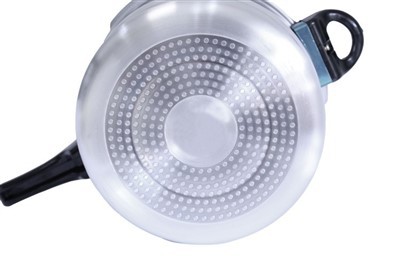
If you’re tired of your omelets turning out burnt, soggy, or rubbery, or you’ve got a single handle pressure cooker gathering dust in your cabinet, give this method a try. And if you’re in the market for a reliable single handle polished pressure cooker that works for both soups and omelets, we’ve got you covered. We’re always here to answer questions, walk you through setup, or help you pick the right size for your kitchen. Hit us up to connect and chat about how our pressure cookers can level up your breakfast (and every other meal, let’s be real).
Hard Anodized Pressure Cooker References:
- Food and Agriculture Organization of the United Nations. (2019). Pressure Cooking for Safe and Nutritious Meals.
- American Egg Board. (2021). Egg Cooking Temperatures and Methods for Optimal Texture.
- Journal of Culinary Science & Technology. (2020). Moist Heat Cooking Effects on Egg Protein Denaturation and Flavor Profile.
Guangzhou Shuangyuan Metal Products Co., Ltd.
As one of the leading single handle polished pressure cooker manufacturers and suppliers in China, we also support customized service. Please feel free to buy bulk high quality metal products made in China here and get pricelist from our factory. For price consultation, contact us.
Address: No. 1 Lidigang, Meishan Village Industrial Zone, Hualong Town, Panyu District, Guangzhou City, China
E-mail: gzsy2003168@163.com
WebSite: https://www.sy2003.com/
