If you’ve ever stood in the garage before a local grassroots race or watched a Formula 1 driver climb into their cockpit, you’ve probably stared a little at the harness straps that cross their chest, loop over their shoulders, and cinch tight around their waist. For most people, they look like heavy-duty versions of the seat belts in their daily car—something that keeps a driver from flying forward in a crash, sure, but not much more than that. As a racing seat belts supplier who’s spent 12 years talking to drivers, crew chiefs, and even the odd engineer who’s worked with top-tier series, I’m here to tell you there’s a lot more going on under that tough nylon exterior than meets the eye. These aren’t just straps—they’re a precision-engineered safety system, built to handle forces no regular road seat belt could ever dream of, and every part of their design ties directly to how they work when things go wrong. Racing Seat Belts
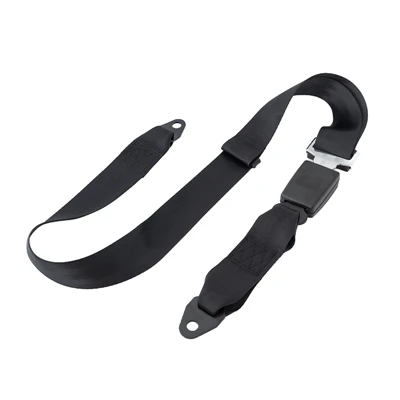
Let’s start with the most basic thing: what makes racing seat belts different from the ones in your sedan. Road car belts are designed for a very specific scenario: a 30 or 40 mph crash, a fraction of a second of deceleration, and a load limit that’s gentle enough not to injure someone in a slower collision. Racing belts? They’re built for speeds that start at 60 mph and go way up to 200, 250 even, with deceleration forces that hit 10, 20, sometimes 30 Gs in a hard stop or crash. A human body under 20 Gs is equivalent to a small car parked on your chest—you can feel that just thinking about it, right? So racing belts aren’t just stronger; they’re built to distribute that extreme load across parts of the body that can actually handle it, instead of cramming all the force into a small spot like your chest or lap.
The first core component here is the webbing. If you’ve run your finger along a racing belt, you’ve felt that tightly woven, slightly coarse fabric—way different from the smooth, thin webbing on road belts. It’s not just heavy-duty nylon here; it’s a high-modulus polyester or ultra-high-molecular-weight polyethylene, engineered to have a specific breaking strength and stretch rate. Stretch is a big one, actually. When a car decelerates suddenly, the belt can’t just lock up immediately—if it did, all the force of your body stopping would hit in a sharp, painful jolt that could cause spinal injuries or broken ribs. Instead, the webbing has a small, controlled stretch (usually around 3 to 5 percent) that absorbs a tiny bit of energy over a fraction of a second, softening the deceleration force on the driver. Road belts use similar stretch, but it’s much more, because road crashes are slower—racing webbing has to be precise, enough to soften the load but not so much that the driver’s head flies forward enough to hit the steering wheel or roll cage.
Next, there’s the hardware, and this is where a lot of amateur drivers skip out on saving a few bucks, which is frustrating for me because it’s the part that keeps webbing from failing when it matters most. The adjusters, buckles, and anchors aren’t just plastic or stamped metal like some cheap aftermarket kits you’ll see online. High-quality racing belt hardware is forged from 6061-T6 aluminum or chromoly steel, rated for loads of thousands of pounds per square inch. The adjusters, usually the ladder-style ones you slide to tighten the straps, have sharp, evenly spaced teeth that lock the webbing firmly in place—no slippage even under extreme load. The buckle, the part you click to fasten, is a dual-release mechanism, designed so that if a driver is unconscious or trapped, first responders can yank it open with a tool, not just fumble with a regular car buckle. And anchors? These are bolted directly to the car’s roll cage or chassis, not the thin sheet metal of a road car’s floor, because the chassis is the only part of the car that doesn’t crumple in a crash. A common mistake I see with new racers is using stock car seat anchors for their belts—those will pull right out in a hard crash, and the belts won’t do a thing.
Now, let’s get into how the whole system works when a crash actually happens, because that’s where the science clicks into place. Take a short track stock car crash, for example: a car going 80 mph slams into the wall, and in 0.08 seconds, it goes from 80 mph to 0. In that tiny window of time, a driver’s body is still moving at 80 mph—without a belt, their head would hit the steering wheel with the force of a small baseball bat swung at full speed, their chest would crush against the wheel, and their body would fly out of the seat entirely, hitting the roll cage or being thrown into another car. A racing harness works by doing two main things: restraining the body and distributing the load.
Most modern racing harnesses are 5-point or 6-point designs, right? Let’s break that down: a 5-point has two shoulder straps, two lap straps, and one crotch strap. The crotch strap is the part that confuses a lot of new drivers—they think it’s uncomfortable, so they skip installing it or cut it short. But that’s a critical piece. When a car decelerates, the driver’s upper body wants to pitch forward, and without the crotch strap pulling down on the bottom of the harness, the lap straps will ride up over the driver’s stomach into their chest, which concentrates all the force on the soft organs and ribs. The crotch strap stops that from happening, keeping the lap straps low, so the load is spread across the strong bones of the pelvis instead. The shoulder straps do the heavy lifting for the upper body, pulling it back against the seat, so the head and neck don’t lurch forward violently. A 6-point harness adds two anti-submarine straps that connect the lap straps to the seat frame, preventing even more movement during extreme crashes, especially in open-wheel cars or formula-style racing where the seat is lower to the ground.
Wait, let’s talk about that neck lurch—this is a big one that a lot of casual observers don’t think about. The neck is one of the most vulnerable parts of the body in a crash, because it’s a long, flexible column that connects the heavy head to the torso. Without a harness, the head can move forward 2 or 3 feet in a high-speed crash, putting massive stress on the neck muscles and spinal cord. Racing belts, paired with a proper fixed seat, keep the torso stationary, so the head only moves a few inches forward at most, reducing that neck force by 70 percent or more, according to some crash test data we’ve looked at. That’s why you never see a professional driver with their head flopping around in a hard crash—their harness is doing its job holding them in place.
Another thing that’s often overlooked is the pre-tensioning and load limiting in some higher-end racing belts, similar to what’s in road cars but tuned for racing. Pre-tensioners are small devices—usually mechanical or pyrotechnic, though most racing series ban pyrotechnics for safety reasons on the track—that instantly take up any slack in the webbing the second a crash is detected. In the milliseconds before a crash, even a tiny bit of slack can add up to dangerous movement, so pulling the belt tight immediately eliminates that extra space. Load limiters, meanwhile, are designed to release a tiny bit of webbing once the load hits a set threshold, so the force on the driver’s body doesn’t go beyond what’s safe. A good load limiter will let the webbing stretch just enough to keep the peak force on the driver’s chest or pelvis under 1,500 pounds, which is the threshold where serious injury becomes likely, according to SAE International data on automotive safety.
I’ve heard every argument from drivers over the years about racing belts. Some say “it’s too tight to drive comfortably,” others say “they just need a basic 4-point for local racing.” Let me address both. Tightness is a feature, not a flaw—when you’re cornering at 1.5 Gs or braking hard, a loose belt will let you slide around in the seat, pulling you off line and making it harder to control the car. Most drivers adjust their belts after their first few laps, once they get used to the feel and realize that a tight, properly fitted belt doesn’t pinch or restrict movement—it keeps them anchored to the seat. As for 4-point vs. 5-point vs. 6-point: it depends on your racing type. Local circle track racing is fine with a 5-point, while open-wheel, rally, or drag racing often requires 6-points because the G-forces are higher. It’s not about overkill—it’s about matching the belt to the forces you’ll actually face in your specific racing discipline.
Let’s also clear up a common myth: racing seat belts don’t replace the need for a proper racing seat or a roll cage. They work in tandem with those parts, not alone. A good bucket seat with deep side bolsters keeps your body from sliding side to side in corners, so the belts can do their job restraining forward and backward movement. A roll cage protects you from falling debris or the car rolling over, and it provides the anchor points that the belts attach to—you can have the strongest belts in the world, but if they’re bolted to a flimsy seat mount that pulls loose in a crash, they’re useless.
Now, if you’re a racer reading this, whether you’re just starting out in entry-level go-karting or moving up to late model stock cars, you know that your safety setup is only as good as the weakest link. I’ve seen so many drivers cut corners on belts to save a few hundred bucks, and the stories that follow aren’t good. Last year, a local racer came to me after a crash where his cheap universal 4-point harness’s adjuster sheared off mid-accident, sending him into the wall with his upper body free. He walked away, but only because the roll cage absorbed most of the impact—things could have been way worse. That’s why as a supplier, I don’t just sell belts; I help drivers figure out exactly what they need, how to fit them, and how to inspect them regularly for wear. Webbing frays at the anchors, adjusters get bent, buckles get dirty, and all of that can make a belt fail when you need it most. We recommend checking your belts before every race, replacing them every 5 years even if they look new, and never using a belt that’s been in a hard crash, even if it looks undamaged—stress can weaken the webbing in ways you can’t see.
If you’re a team owner or looking to outfit an entire fleet of race cars, the same rules apply. Uniformity in safety equipment isn’t just for F1—it’s for local series too. Having every car fitted with properly rated, SFI-approved belts (that’s the Sanford International, the organization that sets racing safety standards in the US, right?) means every driver has the same level of protection, and crew chiefs don’t have to waste time troubleshooting faulty equipment before a race. I work with dozens of series across the country, from local dirt tracks to regional asphalt circuits, to provide belts that meet their specific safety rules, so teams can focus on racing without worrying if their safety gear will hold up.
At the end of the day, racing is a sport built on pushing limits—of speed, skill, and engineering. But pushing those limits only matters if you come back to race another day, and that’s where racing seat belts do their most important work. They don’t get the glory of a race win or a fast lap time, but they’re the unsung heroes that keep every driver safe when the line between control and disaster is paper thin.
If you’re a racer, team manager, or series official looking to upgrade your safety setup, fit new belts for a new car, or just have questions about what kind of system is right for your needs, we’re here to help. We don’t do one-size-fits-all safety, and we don’t cut corners on the gear that keeps you on the track. Reach out to us to discuss your requirements, get guidance on installation and inspection, and find the right racing seat belts for your vehicle and discipline.
Racing Seat Belts References:
- Society of Automotive Engineers (SAE) International. (2021). Human Body Response to Vehicle Deceleration Impacts. SAE International J211: Instrumentation for Impact Tests.
- Sanford International (SFI Foundation). (2023). Racing Safety Equipment Standards: Seat Belts and Harnesses. SFI Specification 16.1.
- Highway Loss Data Institute (HLDI). (2020). Comparison of Racing and Road Vehicle Restraint System Load Requirements. HLDI Traffic Safety Brief.
- International Motor Sports Association (IMSA). (2022). Driver Safety Equipment Manual: Restraint Systems. IMSA Technical Regulations Document 12.
Yangzhong Weian Mechanical and Electrical Co., Ltd.
As one of the most professional racing seat belts manufacturers and suppliers in China, we’re featured by quality products and good service. Please rest assured to wholesale racing seat belts in stock here and get quotation from our factory. Customized orders are welcome.
Address: Group 10, Xinhua Village, Xilaiqiao Town, Yangzhong City; West of The Bus Terminal On Yuanqu Avenue.
E-mail: hfsaml_2008@qq.com
WebSite: https://www.weianseatbelt.com/
