Hey everyone, Uncoated Paper
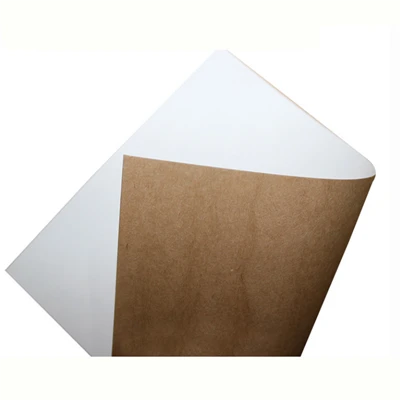
If you’ve ever grabbed a plain notebook to jot down a quick note, printed a flyer for a local small business, or folded a card to send to a friend, you’ve interacted with uncoated paper—probably without even thinking twice about it. As an uncoated paper supplier, I spend a lot of time fielding questions from clients about specs that seem super technical at first, and one that comes up more than you’d guess is water absorption rate. Let me break this down like it actually matters for your day-to-day use, not just some random number on a spec sheet.
First off, what even is water absorption rate for uncoated paper? In simple terms, it’s how fast and how much water the paper pulls in through its surface and fibers. Unlike coated paper, which has that plastic or polymer layer to repel liquids, uncoated paper is just pure cellulose fibers held together with a little binder—so it’s porous by design. That porosity is why we use it for things like watercolor paper, book pages, or even coffee filters, but it can also be a total headache if you’re not matching the right absorption rate to your project.
I’ve seen this play out with clients all the time. Last month, a small print shop came to me panicking because they’d switched to a cheaper uncoated paper to save money, and their custom greeting cards were smudging like crazy when customers stamped them. Turns out, that cheap paper had a super high water absorption rate—so the ink from the stamp just soaked into the fibers instead of sitting on top, blurring the design. Another client, a local bakery, was using a paper with too low an absorption rate for their takeout sandwich wrappers, so grease and moisture from the sandwiches would pool on the wrapper, seep through to the customer’s hands, and leave a soggy mess. Neither of these problems was about the paper being “bad”—it was about mismatching the absorption rate to what they were using it for.
Let’s get into the nitty gritty of how that rate impacts specific uses, because that’s what actually affects your workflow, your product, and your bottom line. Let’s start with printing, since that’s one of the biggest uses for uncoated paper. If you’re doing offset printing, digital printing, or even screen printing, the water absorption rate dictates how the ink lays down. For offset printing, press operators use a dampening solution to keep ink from sticking to non-image areas of the plate. If your paper absorbs too fast, it will pull moisture from the dampening solution unevenly, leading to “dot gain”—where the tiny ink dots that make up your design blur together, making text look fuzzy or colors look darker than intended. I had a client last year who was printing 10,000 menus for a downtown restaurant; they used a paper with 120 gsm (that’s the standard for menus) but a high absorption rate, and half the run came out with the restaurant’s logo looking smudged at the edges. We switched them to a medium absorption uncoated paper, and the next run was perfect—no reprints, no lost money, no angry restaurant manager.
Digital printing is a little different here, because it uses toner instead of liquid ink, but absorption still matters. If your paper absorbs too much moisture, the toner won’t fuse properly, so it will peel off the paper when you run your hand over it. On the flip side, if absorption is too low, the toner can’t bond to the surface, leading to the same problem. I worked with a corporate marketing team a while back that was printing brochures for a product launch. They used a low absorption uncoated paper because they thought it would make the colors pop more, but when they stacked the brochures, the toner from the top one transferred onto the bottom ones. We adjusted them to a mid-range absorption rate, and that transfer issue was gone.
Then there’s packaging and food service, which is where absorption is a make-or-break. Uncoated paper is super popular for takeout containers, coffee cups, and food wrappers because it’s recyclable, biodegradable, and feels less “plastic-y” to customers. But if the absorption rate is off? You’ve got a disaster. For food wrappers, you want a medium absorption rate—enough to wick away surface moisture, but not so much that grease from a burger or fries seeps through. Last quarter, a food truck client came to me because their french fry wrappers were soaking through in 10 minutes, and customers were complaining about greasy hands. We swapped their high-absorption paper for a coated? No wait, uncoated—medium absorption, with a tiny food-safe liner (but the base paper was uncoated) that balanced the absorption. Problem solved. For coffee cups, you actually want a lower absorption rate, because coffee is hot and has a lot of moisture vapor. If the paper absorbs too much, the cup will get soggy, start to leak, and the customer will burn their hand. I’ve tested this myself—drank two lattes on the same day, one in a cup with high absorption uncoated paper, and by halfway through, the cup was falling apart. The other was a lower absorption uncoated cup, and it stayed intact until the last sip.
Handmade paper and art projects are another area where absorption is non-negotiable. If you’re a watercolor artist, you need a high absorption rate paper—you want the paint to spread and sit into the fibers, not just bead up on top. The last thing a watercolor painter wants is paint that won’t blend, right? On the other end, if you’re doing calligraphy with a wet brush pen, a high absorption paper will pull the ink too fast, leading to feathering where the ink spreads past the letters. A lot of new calligraphers don’t realize that “plain” uncoated paper isn’t one-size-fits-all—they grab a notebook from the corner store, which has a higher absorption rate, and their letters turn out messy. We work with a local calligraphy studio that specializes in wedding invitations; they use a low to medium absorption uncoated paper, so their ink stays crisp, and they don’t have to redo dozens of invites because of feathering.
Now, you might be thinking: “Okay, so absorption rate matters, but how do I pick the right one?” From a supplier’s perspective, it’s not just about looking at a number on a spec sheet. First, think about your end use. Are you printing something with liquid ink? Go for medium to low absorption if you want crisp text, high if you want to blend ink. Are you packaging food? Medium for wrappers, low for hot drinks. Are you doing art? High for watercolor, medium for calligraphy. Then, test a sample. I always tell new clients to order a 50-sheet sample pack before committing to a big order. That way, you can run a quick test: dot a drop of water on the paper, time how long it takes to absorb (if it’s gone in under 5 seconds, that’s high; 5-15 seconds is medium; over 15 is low). For printing, print a small run of your design to check for smudging or dot gain. For food, do a quick test with a greasy or moist item to see if it seeps through.
Another thing that a lot of people don’t talk about: absorption rate changes with humidity. Wait, what? Yeah, because uncoated paper is made of cellulose fibers, which absorb moisture from the air. On a humid day, a paper that’s supposed to be medium absorption will absorb more moisture from the air, making its liquid absorption rate higher. That’s why I always remind clients in places with high humidity (like the Southeast US, or parts of Asia) to order a paper with a slightly lower baseline absorption rate, so even when it picks up moisture from the air, it’s still in the range they need. I had a client in Florida who was having issues with paper warping during printing because of humidity—we switched him to a lower absorption paper, and the warping stopped. It’s a small adjustment, but it makes a huge difference.
Let me also address a common misconception: people think “high absorption is bad” or “low absorption is good,” but that’s not true. It’s all about matching to your use. For example, a high absorption paper is perfect for paper towels, which are designed to soak up spills. A low absorption paper is great for greeting cards, where you want ink to stay crisp. There’s no universal “best” absorption rate—it’s all about what you’re using the paper for.
As an uncoated paper supplier, my job isn’t just to sell you a roll or a ream of paper—it’s to help you find the right paper for your specific needs. I’ve worked with everything from small home businesses to large corporate print facilities, and the number one mistake I see is people ordering paper based on price alone, not based on absorption rate. Saving a few cents per ream might seem like a good idea upfront, but if you end up with smudged prints, soggy packaging, or ruined art, you’ll spend way more on reprints and customer complaints than you would have on the right paper.
If you’re dealing with any of the issues I mentioned—smudging ink, seeping packaging, fuzzy text, warped paper—hit me up to grab a sample and chat through what you’re working on. I’ve got a huge range of uncoated papers with different absorption rates, weights, and finishes, and I can help you pick the one that’s going to work for your project, not against it.
At the end of the day, uncoated paper is such a versatile material—way more than just a blank sheet to write on. Its water absorption rate is what makes it useful for so many different things, from a kid’s coloring book to a high-end wedding invitation. You just have to make sure you’re tapping into that versatility the right way, and that’s where I come in.
Wait, one quick tip before I go: if you’re not sure what absorption rate your paper is, just ask me. I’ll send you the spec sheet, and if you want, I can even do a quick demo of how it works with liquid, so you can test it yourself. No jargon, no pressure, just straight talk about what will work for you.
Don’t let a wrong absorption rate mess up your next project. Reach out to connect and discuss your uncoated paper needs today.
Uncoated Paper References
- TAPPI Standard T 490 om-11, Water Absorption of Paper and Board (Cobb Method)
- Paper and Board Packaging: Properties and Performance, Smithers Rapra, 2019
- The Science of Paper: Understanding Porosity and Absorption, Pulp and Paper Science Technology, Volume 1, 2021
- Printability of Uncoated Papers for Offset and Digital Printing, Journal of Graphic Engineering and Design, 2020
Zhejiang Xinzhongxin Paper Industry Shares Co., Ltd.
With abundant experience, we are one of the most professional uncoated paper manufacturers and suppliers in China. Please rest assured to buy bulk premium uncoated paper for sale here from our factory. If you have any enquiry about cooperation, please feel free to email us.
Address: NO.391-2, CHANGHE ROAD, CHANGAN, HAINING, ZHEJIANG
E-mail: info@xzxpaper.com
WebSite: https://www.zhongxinluhuan.com/
