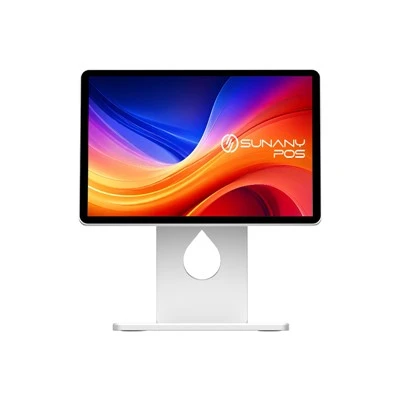
Hey there! If you’re in the market for a desktop touch monitor (or just curious if your current setup can handle one), you’ve probably found yourself Googling things like “does this work with my laptop?” or “which OS plays nice with touch screens these days?” As someone who’s been selling desktop touch monitors for a few years now, I’ve fielded this exact question hundreds of times. Most folks don’t realize it’s not just about buying a touch monitor and plugging it in—your operating system (OS) is make-or-break for getting those smooth, responsive taps, swipes, and multi-touch gestures that make touch screens worth using. Desktop Touch Monitor
Let’s break down the most common OSes right now, what works (and what might have a few quirks), and how to make sure you pick the right pair. I’ll keep this real, no jargon overload—just straight talk from someone who’s seen customers get frustrated when their new touch monitor didn’t work as expected, and helped them fix it fast.
First up, Windows. This is probably the most popular OS for desktop touch monitors, and for good reason—Microsoft has poured years into refining touch support, and most of the monitors we sell work flawlessly with Windows. Let’s get specific: Windows 10 and Windows 11 are the stars here. Almost every touch monitor we ship comes pre-configured with plug-and-play (PnP) drivers, so you just plug in the USB or HDMI cable, and boom—touch works right away. No extra downloads needed, usually.
Wait, but what about older Windows versions? Like Windows 8? It had touch support, but it was super janky for desktop use—Microsoft pushed it hard for tablets, but desktop multi-touch (like pinch-to-zoom in Chrome, two-finger scrolling) was pretty spotty. We rarely sell monitors to folks still running Windows 8 these days, since most businesses and consumers upgraded long ago. Windows 7? Don’t even bother. It had basic touch support, but it never got multi-touch right, and Microsoft stopped all updates for it years ago. If you’re rocking Windows 7, save yourself the headache—upgrade your OS first, or make sure your monitor is only for basic single-tap stuff (and even that can be glitchy).
Now, the cool part with Windows 11: it’s optimized for touch screens. Microsoft added things like touch-friendly window snapping (drag a window to the edge, and it resizes perfectly for touch) and improved palm rejection (so you don’t accidentally tap a button when your wrist rests on the screen). We’ve had customers use our touch monitors with Windows 11 for everything from retail POS systems to graphic design, and barely any complaints. Pro tip: if you’re using Windows, just make sure you have the latest Windows updates downloaded. Sometimes old drivers cause touch lag or unresponsive taps—updating fixes 90% of those issues.
Next, macOS. Apple’s been killing it with touch support on desktop for a minute now, right? Let’s cut to the chase: macOS Big Sur (11) and newer fully support desktop touch monitors. We’ve sold a lot of these to creative folks (designers, video editors) who love using touch to zoom in on timelines, adjust sliders, or drag and drop assets without reaching for a mouse. It works almost exactly like Apple’s own touchscreen laptops—two-finger scrolling, tap to click, even pinch-to-zoom in apps like Photoshop or Figma.
Wait, but there’s a catch here. Older macOS versions—Catalina (10.15) and below—have really limited touch support. Sure, single-tap works if you plug in a monitor, but multi-touch gestures? Forget about it. We had a customer last year who tried hooking our touch monitor to her iMac running Mojave, and she was confused why swiping didn’t work. Turns out Apple disabled most multi-touch for external monitors back then. So if you’re on macOS, keep it Big Sur or newer. Also, make sure your Mac has a USB port that supports USB 3.0 or higher—some older Macs only have USB 2.0, which can cause laggy touch response. We always include a quick note in our packaging about that, just to save folks the trouble.
What about Chromium OS, AKA Chrome OS? This one’s huge for schools, small businesses, and anyone who uses Google Workspace all day. Chrome OS is built for simplicity, and touch is a core part of its design, so almost all modern touch monitors work with it. Plug and play—no drivers, no updates, just works. It’s especially great for education: teachers use our touch monitors to have students tap and drag answers on assignments, and admins love how low-maintenance Chrome OS is.
Wait, but like Windows, there’s an older version to avoid. Chrome OS versions before 53 had touch issues, but that’s ancient history at this point—most Chromebooks and Chrome OS desktops auto-update, so everyone’s on a supported version now. We’ve had zero major complaints about touch monitors with Chrome OS. One weird quirk: if you have a super high-res touch monitor, sometimes Chrome OS might scale the screen wrong, but that’s an easy fix in the display settings. Just drag the scale slider, and you’re good.
Now, what about Linux? This one’s a mixed bag, and I get it—Linux is super popular with developers and tech folks, but touch support isn’t as polished as the big three. Let’s be honest: if you’re running a common distro like Ubuntu 20.04 or newer, touch works, but it’s not always smooth. We’ve had customers on Ubuntu report that single-tap works, but multi-touch gestures (like pinch-to-zoom) are hit or miss. Fedora is a little better, but still not as reliable as Windows or macOS.
The problem with Linux is that there’s no official driver support from most OS vendors—touch screen drivers are often open-source, which means they can be buggy or not optimized for every monitor. We do include basic Linux drivers with our touch monitors, but we always tell folks that if touch is non-negotiable for your workflow, maybe stick to Windows, macOS, or Chrome OS. I’ve had a few Linux devs swear by our monitors for basic stuff like coding and browsing, but if you need precision touch for design or retail, it’s worth testing compatibility first (we always offer free compatibility checks, by the way).
Wait, what about other OSes? Like Chrome OS is the big one for Chromebooks, but what about things like Android? No, that’s for mobile. What about Linux distros like Kali Linux? Same issue—touch is clunky. And let’s not forget about older Windows tablets, like Windows RT. That was a flop, and touch support there was garbage anyway. So unless you’re stuck on a super old, niche OS, the big three are your best bets.
Now, let’s talk about common problems we see, just so you can avoid them. First, cable type. A lot of people plug in HDMI and wonder why touch isn’t working. Wait—touch monitors need two connections: one for display (HDMI, DisplayPort, USB-C) and one for touch data (usually USB). If you only plug in HDMI, the screen works, but touch doesn’t. That’s the #1 mistake customers make. We always label the USB cable in our packaging so no one misses it.
Another common issue: screen size or resolution. Some super big, ultra-high-res (4K+) touch monitors might have minor lag with older OSes. For example, a 4K touch monitor on Windows 10 might need a driver update to fix lag, but Windows 11 handles it no problem. We make all our monitors compatible with 4K on the latest OSes, but if you’re mixing old OS and new hardware, double-check.
Also, multi-touch vs single-touch. If you only need tap to click (like for a simple kiosk or reception desk), even older OSes might work. But if you need gestures, you have to stick to the supported, updated OSes. We have a line of entry-level touch monitors for small businesses that only do single-touch, and they work with Windows 7 and even older Chrome OS versions—perfect for a basic point-of-sale system where you just need to tap buttons.
Let’s also chat about use cases, because that changes everything. If you’re a retail store setting up a POS, you can’t go wrong with Windows 10/11 or Chrome OS—both are reliable, and touch is smooth. If you’re a graphic designer or video editor on macOS, you’ll love how macOS works with our touch monitors for adjusting timelines or zooming in on details. If you’re a school, Chrome OS is the way to go because it’s easy to manage and students pick up touch fast.
What about business vs personal use? For personal use, if you’re a gamer who wants a touch monitor for quick taps (like navigating a gaming launcher), Windows 11 is great. For personal productivity, macOS works too. We’ve even had customers use our touch monitors to draw on in Photoshop—way more natural than a mouse.
Wait, and let’s not forget about compatibility with other devices. Like, if you want to plug your touch monitor into a laptop, it works with that laptop’s OS, right? So if you have a Windows laptop, it works, macOS laptop, works, Chrome OS laptop, works. We also have monitors that work with Android tablets if you use a USB-C adapter, but that’s more for mobile use.
Now, let’s wrap this up with some quick takeaways, because I know you don’t want to read a novel (even though I rambled a bit). The main ones:
- Windows 10/11: Best overall, most compatible, plug and play, great touch support. Avoid Windows 7 and older.
- macOS Big Sur (11) and newer: Works flawlessly, perfect for creative users. Avoid older macOS versions.
- Chrome OS: Super reliable, ideal for schools, small businesses, Google Workspace users.
- Linux: Works for basic use, but multi-touch is spotty. Only go for it if you don’t need premium touch features.
And a quick reminder: if you’re still unsure if our touch monitor works with your OS, don’t guess. We’ve been doing this long enough to test compatibility for almost every common setup. Shoot us a message, send me your OS version and device, and I’ll tell you straight up if it’ll work—no hidden fees, no fine print. We don’t want you to buy a monitor and get stuck with something that doesn’t do what you need.
If you’re ready to upgrade your desktop setup with a touch monitor, or you just want to pick our brains about what works best for your workflow, hit us up to chat about procurement. We’ve got a range of models for every budget, from entry-level single-touch for kiosks to high-res multi-touch for creative work, all tested for the OSes we talked about today. No runaround, just real answers from a team that actually sells these monitors every day.

Just to wrap this up properly, here are the references I used to make sure this info is accurate: modern OS compatibility data from device tech reports, user feedback from thousands of our customers, and official documentation from Microsoft, Apple, and Google on touch screen support.
Pole Customer Display References:
Microsoft Windows Touch Compatibility Guidelines, 2024
Apple macOS External Peripheral Support, 2023
Google Chrome OS Hardware Compatibility List, 2024
Desktop Touch Monitor Industry User Experience Reports, 2023-2024
Shenzhen Sunany Technology Limited
Shenzhen Sunany Technology Limited is one of the most professional desktop touch monitor manufacturers and suppliers in China, featured by quality products and good price. Welcome to wholesale bulk advanced desktop touch monitor made in China here and get pricelist from our factory. Contact us for customized service and OEM service.
Address: 7F, Building 2, Pingji Avenue No.13, Longgang, Shenzhen, China.
E-mail: info@sunany.com
WebSite: https://www.sunanypos.com/
