Hey there, ever stopped to think about how those blower fans keeping your warehouse cool, or your HVAC system running efficiently, actually work? If you’ve been in the market for fans lately, you’ve probably seen the term “EC motor” thrown around—but what the heck is it, exactly? And why should you care as someone shopping for blowers? As a guy who’s been supplying EC blower fans for years, I’m here to break this down like we’re chatting over a coffee (no stuffy engineering jargon, promise). EC Blower Fan
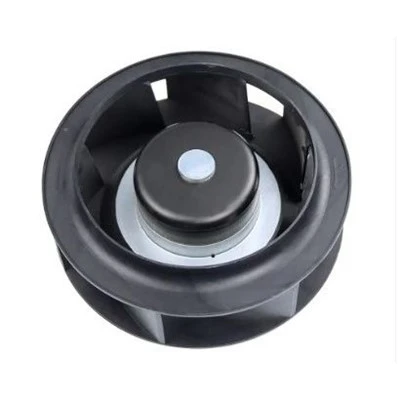
First off, let’s ditch the confusing long names. EC stands for Electronically Commutated, right? Wait, but before we get into what that means, let’s quickly compare it to the old-school motors you’ve definitely seen before—like the ones in your old desk fan that hums so loud it drowns out your podcast. Those are AC (alternating current) motors, the standard for decades. AC motors work by switching the direction of the current hundreds of times a second to spin the rotor, which powers the fan blades. The problem? They’re super inefficient, waste a ton of energy as heat, and you basically have two settings: full blast or off. Adjust the speed? Good luck, that usually means adding a bulky, finicky variable speed drive that costs more and breaks easier.
Now EC motors? They’re DC (direct current) motors with a built-in microcontroller. That’s the game-changer. Instead of relying on the AC current flipping directions, that tiny brain (the microcontroller) takes the AC power from your wall and converts it to DC internally, then uses electronic signals to control when power goes to each part of the motor. That means way more precise control over the speed and torque, no external drive needed. And let’s be real—precision is huge for blowers, whether you’re moving air for a commercial paint booth, a server room that overheats easy, or even a greenhouse where humidity and airflow make or break your crops.
Let me put this in terms that matter to you, not just specs. I’ve had customers come to me saying they were burning through way too much electricity running their old AC blowers for their factory. One guy ran a 10,000 sq ft workshop, and his energy bill was $1,200 a month just for the ventilation fans. We swapped out his old AC blowers for EC ones, and his bill dropped to $700. That’s a $500 a month savings—almost $6,000 a year. And get this: the EC fans run quieter too. No more that annoying low hum that makes your ear drums hurt after an 8-hour shift. The microcontroller adjusts the speed smoothly, so when you don’t need full airflow (like at night in the warehouse), it cranks down automatically, saving more energy.
Wait, but are EC motors worth the upfront cost? I know, I know—everyone looks at price first. Yeah, an EC blower might cost a bit more than an old AC one at first. But do the math. Those energy savings I mentioned? Most customers make up the difference in 12 to 24 months, sometimes less if they’re running the fan 24/7. And EC motors last longer, too. No bulky external parts to break, the microcontroller has fewer moving parts than an AC motor, so less wear and tear. I’ve got customers that have had our EC blowers running 5 years straight with zero maintenance, while their old AC motors were dying every 18 months. That’s less downtime for you, which means more money in your pocket.
Let’s talk about use cases, because EC blowers aren’t just for big factories. I’ve sold them to HVAC technicians for commercial buildings—office towers, grocery stores, restaurants that need consistent airflow to keep the AC balanced. Grocery stores especially love them because they run quietly near the dairy and produce sections, and they adjust speed based on how many people are in the building. No more blasting full AC when it’s just a handful of employees at 2 a.m. They also work great for smaller applications too—like portable blowers for workshops, or even for vending machines that keep snacks cool. I had a customer who makes custom pizza ovens, and he switched to our EC blowers because they maintain a consistent airflow to keep the oven temperature even, which makes his pizzas cook better. He used to get complaints about uneven crusts, now he gets rave reviews.
Now, I know some of you might be thinking, “Wait, is this just a marketing gimmick?” No, trust me. We’ve tested these motors side by side with AC ones for years. The key difference is that microcontroller—let me explain that a little more without boring you. In an AC motor, the speed depends on the frequency of the AC current, right? So if you want lower speed, you have to mess with that frequency, which uses extra energy and causes that hum. With EC, the microcontroller can adjust the power to the motor in tiny increments, so you get exactly the speed you need, no wasted energy. It’s like the difference between driving a car with a manual transmission vs. an automatic that adjusts the gear for the road. The automatic is more efficient, right? Same idea here.
Another thing: EC blowers are way more precise with airflow. If you need a specific CFM (cubic feet per minute) for your application—say, a server room that needs 5,000 CFM to keep the servers from overheating—an EC blower can hit that exact number, and stay there, even if the voltage changes. Old AC blowers would fluctuate, so you’d either be blowing too much air (wasting energy) or too little (risking overheating). That precision is a huge deal for industries where consistency is non-negotiable.
Let me share a recent example to make this real. A construction company I work with was using AC blowers to ventilate their enclosed bridge project. They were going through motors every few months, and the electric bill was killing their budget. They switched to our EC blowers, and not only did their electric bill drop 40%, but they haven’t had to replace a motor in 18 months. They also said the noise level went down so much that their workers could actually hear each other on the job site, which made communication way better and reduced safety risks. That’s a win across the board, not just for costs.
Now, if you’re in the market for a new blower, what should you look for when picking an EC one? First, make sure it’s actually EC—some companies slap the label on AC motors just to trick people. Look for a supplier that’s transparent about the microcontroller and energy efficiency ratings (they usually have a higher IE rating, IE4 or IE5, which is the top tier for motors). Second, match the blower to your needs. A small EC blower for a home HVAC system is way different than a heavy-duty one for a factory, so don’t buy a size that’s too big or too small. Third, check for compatibility. A lot of EC blowers work with standard controls, so you can hook them up to your existing system without doing a whole overhaul.
I get it, change is hard. If you’ve been using AC blowers for years, it’s easy to stick with what you know. But after 10 years supplying EC blowers, I’ve seen too many customers say they regret not switching sooner. The energy savings alone make it worth it, but add in longer lifespan, lower noise, better performance, and less maintenance? It’s a no-brainer.
Look, I’m not here to push you into buying something you don’t need. But if you’re tired of high energy bills, broken motors, or blowers that don’t perform like they should, EC blowers are the way to go. We’ve got a range of sizes, from tiny portable units to heavy-duty industrial ones, so whatever your application—HVAC, manufacturing, agriculture, construction, even custom projects—we’ve got you covered.
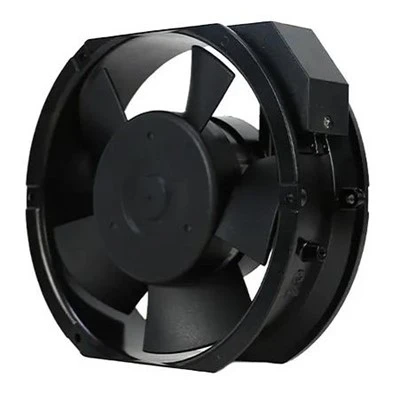
If you’re ready to stop wasting money on inefficient blowers and get something that actually works for your business, reach out to us to chat about your needs. We can help you figure out the right EC blower for your space, give you a custom quote, and answer any questions you have—no sales pitch, just straight talk from a supplier that’s been in this game for years. Don’t settle for blowers that cost you money in the long run. Make the switch to EC, and I promise you won’t look back.
AC Axial Fan References:
- NEMA Standards Publication MG 1-2021: Motors and Generators, National Electrical Manufacturers Association
- Air Movement and Control Association International (AMCA) Standard 99-2020: Performance Certification for Air Moving Devices
- U.S. Department of Energy, Energy Efficiency and Renewable Energy: Electronically Commutated Motors (ECMs) for Commercial and Industrial Applications, 2022
Dongguan Shengzhirong Electronics Co., Ltd.
As one of the most professional ec blower fan manufacturers and suppliers in China, our products have good reputation in the market. Please rest assured to wholesale high quality ec blower fan made in China here from our factory. Customized orders are welcome.
Address: 6/F, Building 2, No.68, Shunxing 2nd Road, Dajingtou 2nd Industrial Zone, Dalang Town, Dongguan City, Guangdong, China
E-mail: szr_coolingfan@163.com
WebSite: https://www.szrfan.com/
