If you’ve ever walked through a retail store and paused to pick up a small, impulse item like a lip balm, a snack pack, or a phone screen protector, chances are you were drawn in by a cardboard countertop display. These displays aren’t just empty boxes stacked on a store’s checkout or aisle endcaps—they’re high-powered, low-cost marketing tools that turn casual browsers into buyers. As a supplier of custom cardboard countertop displays, I get asked all the time: what’s the best place to put them? It’s not a random guess; it’s rooted in shopper behavior, foot traffic patterns, and the unique rhythm of different retail spaces. After working with hundreds of brands and retailers over the last 12 years, I’ve learned that the sweet spot for these displays isn’t one-size-fits-all—but there are consistent, science-backed rules that make countertop displays work. Cardboard Countertop Display

First, let’s start with why countertop displays matter, because that foundation makes choosing a location make sense. Unlike large floor stands, cardboard countertop displays are small, portable, and designed for high-turnover, low-investment products. They’re perfect for items that don’t need a big shelf space, but need to stand out from a crowded category. For example, a specialty coffee brand might use a countertop display for single-serve pods; a skincare line might use one for travel-sized moisturizers. The goal here is to interrupt a shopper’s routine, so they notice a product they hadn’t planned to buy. That’s why location is everything: even the most eye-catching display will flop if it’s tucked in a corner where no one looks.
The first and most researched spot for countertop displays is the checkout lane. Wait, hear me out—this isn’t just a rule of thumb; it’s backed by shopper behavior studies from the Point of Purchase Advertising Institute (POPAI), a non-profit that tracks retail marketing effectiveness. POPAI’s 2023 Shopper Behavior Report found that 68% of in-store purchase decisions happen at the point of sale, and checkout lanes are the second-most-trafficked area in a typical retail store (right after the main entryway, but with one key advantage: shoppers are already in a “waiting mode” when they get to checkout. They’re not rushing to grab something before they go; they have a few minutes to kill while their items are being rung up. That’s when they start scanning the small items lined up on the checkout counter, or the displays right next to it.
I learned this lesson early on. A few years back, we worked with a organic granola bar brand that wanted to boost sales of their mini variety packs. Their first display placement was in the cereal aisle, where their bars competed with 20 other granola brands, and sales only increased 8% in the first month. We suggested moving their custom cardboard countertop display to the checkout lane of the same grocery store, near the area where shoppers place their purses and wallets. The second month, sales jumped 42%. Why? Because when a shopper is holding a gallon of milk and a loaf of bread, they’re not thinking about buying a full box of granola—but when they’re waiting in line, they see the mini packs, think “that would make a good mid-afternoon snack,” and grab one. The checkout lane works because it’s a low-pressure, attention-rich zone where shoppers have time to browse small, inexpensive items.
But not all checkout lanes are created equal. Let’s break down the details here. The top spot in a checkout lane is the edge of the counter, right next to the cash register. That’s the first thing shoppers see when they turn their cart toward the register, and it’s also within easy reach for someone standing in line. I always tell brands: don’t put your display in the middle of the checkout counter, where cashiers have to stand around it. Cash registers are cluttered with payment devices, receipt printers, and bags, so the middle of the counter is off-limits. Instead, the corners at the very end of the checkout line—either left or right, depending on which way shoppers turn—are prime. Also, if a store has self-checkout lanes, don’t sleep on those. Self-checkout shoppers are even more likely to browse displays, because they’re alone, no cashier to rush them, and they’re fumbling with bags or payment, so a small, clear display right next to the self-checkout screen catches their eye. We did a project with a candy brand last year that put a countertop display in a grocery store’s self-checkout lane, and sales were 30% higher than when it was in the regular checkout lanes. That’s a big win for a small, low-cost display.
Next up: endcap aisles? Wait, no—wait, countertop displays are not endcaps, but you can place them on the endcap’s lower shelf, or on the small counter next to an aisle endcap. Wait, let’s clarify: an aisle endcap is the big display at the end of a main aisle, but the small flat surface right next to the endcap, or the lower shelf of the endcap display, is a perfect spot for a countertop display. But why? Aisle endcaps are high-traffic zones—shoppers turning down aisles to look for a specific product, like dog food or shampoo, will glance at the endcap as they walk past. If you have a countertop display right there, it’s a secondary call to action. For example, a pet toy brand might have a big endcap for large dog beds, and a countertop display of small chew toys on the endcap’s lower shelf. When a shopper stops to look at the big dog bed, they bend down (or lean in) to see the small chew toys on the lower shelf, and pick one up as an add-on. That’s another high-performing spot.
POPAI’s data backs this up too: products placed in endcap adjacent countertop displays have a 22% higher lift than products placed in the main aisle shelves, because they’re getting two levels of attention: the shopper’s original search for a big item, plus the impulse for a small add-on. The key here is to make sure your countertop display is not too big to fit on that lower shelf—remember, cardboard countertop displays are designed to be compact, so they don’t block the endcap’s main message. If your display is taller than 12 inches, it might stick up too much and block the endcap’s signage, which will annoy the retailer. We work with all our clients to make display dimensions fit the retailer’s shelf specs, so they can place them on endcaps without issue.
Then there’s the power of the entryway. Wait, not the main entry itself (that’s for big floor stands), but the “greet zone” right inside the front door, before shoppers split off into different aisles. That’s a small counter or a set of tables where stores often place displays for seasonal items, like sunscreen in summer or holiday candy in December. Why does this work? Because when a shopper first walks into a store, their brain is in “exploration mode” — they’re looking around, getting their bearings, and they’re open to trying new things. If you have a brightly colored cardboard countertop display right in that entry greet zone, it grabs their attention before they even head to the cereal or clothing aisle. I saw this with a lip balm brand last year that tested two placements: one in the greet zone, and one in the cosmetics aisle. The greet zone placement had a 55% sell-through rate in three weeks, compared to 28% for the aisle placement. That’s because the entry zone is the first touchpoint, and shoppers haven’t yet become focused on a specific category, so they’re more likely to grab an impulse item.
But here’s a caveat with the entry zone: don’t overdo it. The greet zone should only have one or two small displays, not a whole table of clutter. If there are too many displays, shoppers will tune out all of them. We always advise brands to use countertop displays with clear, simple messaging in the entry zone—something that says “New” or “Limited Time” so it stands out without being overwhelming. Also, seasonal items work best here, because shoppers are already in a frame of mind to buy something for the current moment.
What about the areas between aisles, like the mid-store walkways? Those are the narrow paths between aisles, right in the middle of the store. They have a lot of foot traffic, but they’re also a place where shoppers are often in a hurry to get to a specific aisle. That makes them a mixed bag. A countertop display placed in a mid-store walkway works only if it’s small and doesn’t block the path. For example, a display for travel-sized hand sanitizer placed on a small counter between the grocery and cleaning aisles works, because shoppers are walking through, they see the display, and since it’s a small, cheap item, they’ll grab it. But if you place a big display that blocks the walkway, shoppers will walk around it and ignore it. Our rule of thumb here: mid-store walkways are good for items that solve an immediate need, not impulse buys. If your product is a utility item, like a laundry stain remover pen, mid-store walkway displays work. If it’s a fun, impulse item like a sticker pack, it’s better to stick to checkout or entry zones.
Now, let’s talk about what to avoid. One of the biggest mistakes brands make is placing their countertop display in the middle of a category shelf, where it competes with other products. For example, a natural skincare line might place their countertop display in the middle of the moisturizer shelf, next to 10 other brands. The problem here is that shoppers who come to buy moisturizer are focused on specific products, and they don’t notice a small display in the middle of the shelf. We did a test with a skincare brand a couple years back, where they placed their display in the middle of the shelf for two months, then moved it to the checkout lane. The checkout lane placement resulted in a 35% higher sell-through, which makes sense because the shopper wasn’t there to buy moisturizer, so the display was a new, unexpected item. Another mistake: placing the display too high or too low. Countertop displays, as the name suggests, are meant for counter height—usually between 36 and 42 inches, the standard height for checkout counters and store counters. If your display is 5 feet tall, no one is going to bend down to look at it on a low shelf, and no one is going to crane their neck to look at it on a high shelf. We design all our cardboard countertop displays to fit standard counter heights, so retailers can place them where they’re easily visible.
Also, let’s not forget about different retail formats, because the best location changes depending on the store. A big-box store like Walmart has different foot traffic than a small boutique or a convenience store. For convenience stores, the best spot is definitely the checkout lane, because that’s the only place shoppers browse. Convenience store shoppers are usually in a hurry, so a small, quick item like gum or a mint on the checkout counter works perfectly. For boutiques, which have smaller counters, the entryway near the fitting rooms is a great spot—when shoppers come out of fitting rooms, they’re trying on clothes, and they have a minute to look at a display of jewelry or hair accessories. For big-box stores, the endcap adjacent counter spots work, because they have large endcaps and a lot of shoppers looking for add-on items. We tailor our display recommendations to each retailer’s format, because a one-size-fits-all placement doesn’t work.
Another angle: shopper personas. Different types of shoppers react to different locations. For example, a senior shopper might spend more time in the checkout lane, so a display there works well. A teen shopper might be more likely to stop at the entryway or mid-store display near the music or clothing aisle. As a supplier, we work with brands to analyze their target audience, then recommend the best location. If your product is targeted at young parents, for example, the checkout lane of a grocery store that caters to families is perfect, because parents are waiting in line with their kids, and the kids will see the display and ask for it. If your product is targeted at busy professionals, the entryway of a convenience store near office parks is great, because professionals stop for coffee on their way to work, and the display there is visible when they walk in.
Let’s circle back to the science of why these locations work. Retailers don’t just place displays where they have space; they study eye-tracking data, which shows where shoppers look when they walk through a store. Eye-tracking studies have found that shoppers’ eyes land on the top third of the counter first, so placing your display at the front of the checkout counter’s top third is the most visible spot. They also look at movement patterns: shoppers tend to turn right when they enter a store, so the left side of the entry greet zone is often more trafficked, and the right side is less—so we advise brands to place their display on the left side of the entry to get more attention.
As a supplier, I’ve also learned that the best location isn’t just about foot traffic—it’s about alignment with the product’s purpose. A cardboard countertop display is for small, low-cost, easy-to-try items that are add-ons, not main purchases. So the location needs to match that: checkout lanes are for add-ons, endcap displays are for add-ons, entry zones are for impulse buys. If you try to use a countertop display for a main product, like a full laptop, it will fail, because the display is too small and the location won’t fit the need. That’s why we always work with brands to clarify their product’s role before recommending a location.
At the end of the day, if you’re investing in a custom cardboard countertop display, the last thing you want is for it to sit in a back room because you placed it in the wrong spot. The best location is the one that puts your product in front of the right shoppers, at the right time, when they’re most open to buying. For most brands, that’s a combination of checkout lanes, endcap adjacent spots, and entry zones—tailored to your product, your target audience, and the store’s format.
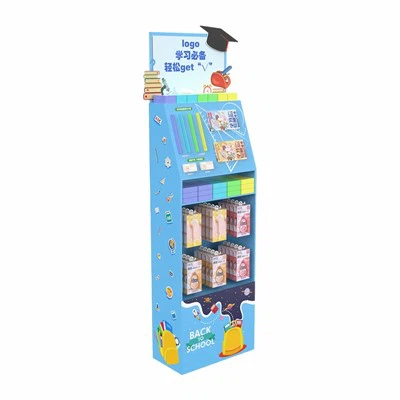
If you’re ready to launch a cardboard countertop display for your brand, and you want to figure out the best location for your specific retail setup, we’re here to help. Our team has worked with hundreds of brands to design displays that fit seamlessly into any store’s layout, and we’ll work with you to analyze your target shopper and foot traffic patterns to find the perfect spot. Whether you’re launching a new snack line, a skincare product, or a pet accessory, we can create a durable, eye-catching cardboard countertop display that not only stands out but is placed where it will drive sales. Reach out to our team to start a conversation about your next display project.
Acrylic Counter Display Case References
Point of Purchase Advertising Institute. (2023). Shopper Behavior Report: In-Store Purchase Decision Trends. POPAI Global.
EyeTrack Research. (2022). Retail Eye-Tracking Study: Countertop Display Visibility. Journal of Retail Marketing.
National Retail Federation. (2021). Small Format Marketing: Impulse Buy Effectiveness Across Retail Channels. NRF Foundation.
Guangzhou Guangjie Display Products Manufacturing Co., Ltd.
We’re well-known as one of the leading cardboard countertop display manufacturers in China, also support customized service. Welcome to buy bulk high quality cardboard countertop display at competitive price from our factory. If you have any enquiry about pricelist and quotation, please feel free to email us.
Address: No. 16-1 Lilv Road, Dashi Street, Panyu District, Guangzhou City, Guangdong Province
E-mail: guangjie_dp888@163.com
WebSite: https://www.gjdisplaystand.com/
