Hey there, if you’re anything like the countless homeowners, handymen, or shop owners I chat with every day, you’ve probably stared at a broken sliding wardrobe door at 7 PM on a Sunday, Googled “what size sliding door rollers do I need,” and wound up with 100 conflicting results. I’m [Your Brand Name]—I’ve been a wardrobe sliding door roller supplier for over a decade, and I’ve fielded this exact question at least 10 times a day, every single day, since I started. Today, I’m breaking this down like I would for a buddy who’s trying to fix their own closet without calling a costly handyman. No fancy jargon, no endless scrolls—just real, actionable info you can use. Wardrobe Sliding Door Rollers
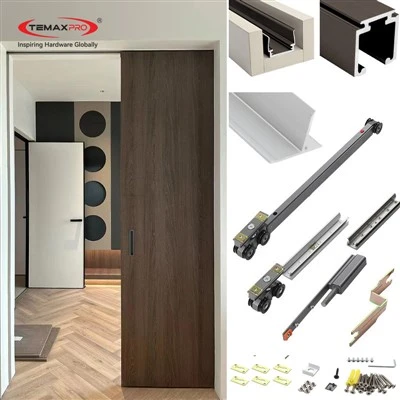
First off, let’s get one thing straight: sliding wardrobe door rollers aren’t one-size-fits-all. I’ve seen folks grab a random roller from the hardware store, slap it on, and watch their door fall off the track an hour later. Not fun, especially when you’ve got all your winter coats stuffed in there and now they’re covered in dust from the floor. So why does size matter so much? The roller’s job is to hold the door steady, glide smoothly, and support its weight. If it’s too small, it’ll bend or get crushed under the door’s heft; too big, and it won’t fit in the track, leaving your door wobbly or impossible to open.
Let’s start with the basics you can measure right now—no fancy tools needed, just a tape measure and 2 minutes to kneel by your closet. The most critical number here is roller diameter, not the length or width of something else. Wait, hold up—don’t just pull out the old roller and guess if it looks the same. Trust me, I see this all the time: someone yanks a old roller out, holds it next to a new one, and goes “eh, looks similar” only to realize the old one had worn down over time. That’s the key—worn rollers shrink, so if you measure the beat-up one, you’ll get a number that’s too small. I always tell customers to check the track and the door’s height, not just the old part, to avoid this mistake.
So how do you measure for the right diameter? First, get on your knees and slide the door fully open so you can see the bottom track clearly. Most wardrobe tracks are either aluminum or plastic, and their internal width (that’s the space where the roller sits) is a dead giveaway for the roller size. 90% of residential sliding wardrobe doors fall into three common track/roller size categories: 15mm, 17mm, and 19mm. Let me break these down for you: 15mm rollers are tiny—you’ll find these on super narrow, lightweight closet doors, like the ones in apartments that only hold a few shirts. 17mm is the workhorse size; that’s what most standard 40kg to 60kg wardrobe doors use, which is the average for most homes. 19mm is the heavy-duty one for doors 60kg and up—think walk-in closets with thick wooden doors or mirrored doors, which are way heavier than plain wood.
Wait, but hold on—diameter isn’t the only number. You also need to check the roller’s width, or the part that sits inside the track. That width has to be smaller than the track’s internal width, but not so small that the roller wiggles around. For example, if your track is 17mm wide, a roller with a 6mm width is perfect—enough to keep it stable, not so wide it gets stuck. If it’s a mirrored door, you might want a slightly wider roller, like 8mm, to distribute the weight better and prevent the door from tilting. I tell people to measure the track’s internal slot with a digital caliper if they have one, but a regular tape measure works too—just be precise to the nearest millimeter.
Now, let’s talk about weight, because this is the part that trips people up way too often. I get calls all the time from someone with a 70kg mirrored door asking for 15mm rollers. “It looked right!” they say. Yeah, but a 19mm roller is what that door actually needs. The rule of thumb here is: each roller should support roughly 20kg to 25kg. So if your door has four rollers (two on the top, two on the bottom, which is standard), that’s 80kg to 100kg total weight capacity. If your door is heavier than that, you’ll either need a larger diameter roller or more rollers. For example, a walk-in closet door that’s 80kg with four rollers would need 19mm rollers, each handling 20kg, which adds up perfectly.
Let’s do a quick real-world example to make this concrete. Last month, a customer emailed me: “My apartment closet door won’t slide, it sticks and falls off the track sometimes.” He sent a pic, so I asked him to measure. His track internal width was 16.8mm (so almost 17mm), his door was 55kg, and it had four rollers. I recommended 17mm nylon rollers for the bottom and 17mm steel core rollers for the top (more on that in a sec). He ordered them, and emailed me the next day saying it slid like a new door—no sticking, no falling off. If he’d guessed and gotten 15mm rollers, they would’ve worn out in a month because they couldn’t handle the weight.
Another thing to consider is the roller’s core, which ties into size even if you don’t think about it. Smaller rollers (15mm) are usually all nylon, which is fine for lightweight doors. But for medium sizes (17mm), a steel core nylon roller is better—adds strength so it doesn’t bend under the door’s weight. Larger 19mm rollers are almost always steel with a nylon outer layer, because they’re handling so much weight you need the metal core to keep them from deforming. I see a lot of cheap no-name rollers that use all nylon for 19mm sizes, and they crack within a few months—don’t go for that, even if it’s cheaper. The extra dollar or two per roller is worth it to not be replacing them every few months.
Wait, what if you’re replacing all the rollers and your track is a little worn? Sometimes tracks get stretched over time, so the internal width is slightly wider than it used to be. In that case, you might want to go with a roller that’s a tiny bit narrower than the standard size, so it doesn’t get stuck in the worn track. For example, if your track is 17.5mm wide, a 5.8mm wide roller instead of 6mm will glide better. But don’t overdo it—if the roller is way too narrow, it’ll tilt and the door will wobble.
Now, let’s go over the common mistakes I see, so you can avoid them. First, don’t assume the old roller is the right size. As I said earlier, worn rollers shrink, so if you measure a beat-up roller, you’ll get a size that’s too small. That’s a huge one—half the wrong size issues come from this. Second, don’t just go by the door’s width. A 1.2m wide door is light if it’s thin particleboard, but heavy if it’s solid wood or mirrored. So weight beats width every time. Third, forget the track type. If you have a top-mounted roller track (common for newer wardrobes) vs. bottom-mounted (older ones), the size might be slightly different. For top-mounted, the roller’s diameter is usually measured from the top of the roller that sits in the track, while bottom-mounted is the bottom of the roller. I always tell people to look at the track slot first, regardless of where the rollers are.
What if you still aren’t sure? That’s what I’m here for, and honestly, that’s why I answer the phone at 6 PM sometimes. If you can’t measure the track or don’t want to guess, just take a pic of your old roller next to a ruler, or a pic of the track and the door, and send it over. I can tell you the right size in 2 minutes, no pressure. No need to buy the wrong thing and return it—save yourself the hassle.
Wait, let’s wrap this up with a quick recap so you don’t have to scroll back: 1) Measure your track’s internal width first, that’s your base size (15, 17, or 19mm diameter). 2) Check your door’s weight to confirm—lightweight doors = 15mm, medium =17mm, heavy/mirrored =19mm. 3) Match the roller width to the track, leaving a tiny gap so it doesn’t wiggle but doesn’t get stuck. 4) Ditch worn old rollers for measurements, they lie.
Sliding wardrobe door rollers might seem like a tiny part, but they’re the reason your closet works smoothly every single day. I’ve had customers tell me that getting the right size rollers made their whole house feel organized again—no more fighting with a stuck door when you’re rushing to get ready for work. That’s why I do this: I hate when small, simple parts cause big headaches.
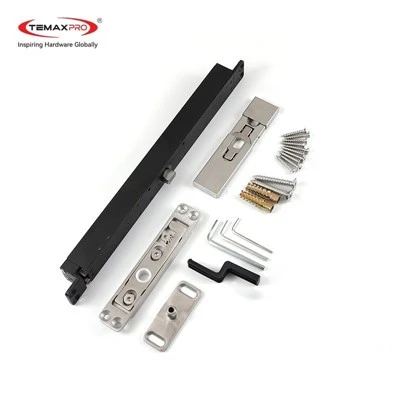
If you’re working on a project right now, whether it’s fixing your own closet, updating a rental, or restocking for your shop, don’t guess the size. Send over your questions, and I’ll help you get exactly what you need, no hassle. No random sizes, no cheap parts that break in a month—just rollers that fit, work, and last. Reach out anytime to chat through what you need.
Push-to-open & Smart Solutions References:
- National Kitchen & Bath Association. (2021). Wardrobe and Closet Component Specifications. NKBA Industry Guidelines.
- Sliding Door Hardware Association. (2022). Roller Size and Weight Capacity Standards for Residential Sliding Closet Doors. SDHA Technical Bulletin.
- Residential Hardware Manufacturers Association. (2020). Best Practices for Measuring and Installing Sliding Door Rollers. RHMA Installation Manual.
Shanghai Temax Hardware Co., Ltd.
As one of the most professional wardrobe sliding door rollers manufacturers and suppliers in China, we’re featured by quality products and good service. Please rest assured to buy bulk customized wardrobe sliding door rollers at competitive price from our factory. Welcome to contact us for quotation.
Address: Room 411, Building A, No.508 Chundong Rd.,Shanghai,China
E-mail: info2@shtemax.com
WebSite: https://www.shtemax.com/
