As a PIR foam supplier, I get this question every single day: Is PIR foam toxic to humans? It’s not surprising—when you’re building a home, retrofitting an office, or selecting insulation for a commercial project, safety is non-negotiable. I’ve had architects call me at 9 AM asking if our foam will off-gas fumes that trigger allergies, homeowners send emails about long-term exposure risks, and contractors stop by my warehouse to ask if it’s safe to install without respiratory gear. The truth is, PIR foam’s toxicity isn’t a yes or no answer—it’s rooted in how it’s made, installed, and used. Let me break this down, straight from someone who’s spent 12 years in the insulation game, not a textbook. PIR Foam

First, let’s get clear on what PIR foam is. Polyisocyanurate (PIR) is a closed-cell rigid insulation foam made by combining two main chemicals: isocyanate and polyol. When these mix in a controlled manufacturing process, they react to form a dense, cell-structured foam. That reaction produces the foam itself, but the raw materials and additives used in that process are where the safety questions start.
Let’s tackle the immediate “toxicity” people worry about first—off-gassing, or what in the industry we call VOCs (volatile organic compounds). VOCs are gases released from solids or liquids at room temperature, and many people associate them with new products, especially building materials. Early on, 1970s and 80s PIR foam formulations did have higher VOC levels. Back then, manufacturers used chlorofluorocarbons (CFCs) as blowing agents to create the foam’s cells. CFCs are now proven to be ozone-depleting, and they also released harmful VOCs when the foam was new. But here’s the thing: those old formulations are basically obsolete today.
Modern PIR foam uses hydrofluorocarbons (HFCs) as blowing agents, then in the last 10 years, many suppliers including my company have switched to non-ozone-depleting blowing agents like hydrofluoroolefins (HFOs) or even pentane, which is a hydrocarbon. Studies from the EPA, the American Chemistry Council, and independent labs show that the VOC levels in today’s PIR foam are extremely low. In fact, most of our PIR panels meet GREENGUARD Gold standards, which are the strictest for low-emission products. That means they’re safe for use in schools, hospitals, and homes—even with sensitive people like asthmatics or young kids.
I should mention, though, that no product is zero-VOC. Even wooden furniture or new carpet releases small amounts of gases. The key is that PIR’s off-gassing drops off significantly within the first few weeks after installation. I’ve seen it in our own testing: when we take a new panel, measure VOC levels immediately, then test again after it’s been in a climate-controlled room for 30 days, the VOC reduction is over 90%. After that, the off-gassing is minimal—so minimal that most people can’t smell it. If you do smell something “new” from PIR, it’s usually just the residual blowing agent, not something toxic. Ventilation for a few days after installation is enough to eliminate that faint smell.
Now, what about the manufacturing process? That’s another angle people often miss. If workers in a PIR foam plant aren’t using proper PPE (personal protective equipment), exposure to raw isocyanates can be a problem. Isocyanates are irritants—they can cause skin rashes, eye irritation, or respiratory issues if you’re exposed to high levels over a long time. But that’s not a risk for people using the foam in their homes or offices. The foam as a finished product doesn’t have free isocyanates. The reaction in manufacturing is complete, so once the foam is cured (which happens within hours of production), there’s no unreacted isocyanate left. I make sure our factory workers follow OSHA guidelines—respirators, gloves, eye protection—because that’s their job. For end users, that risk is nonexistent.
Wait, what if the foam catches fire? That’s a big one for insulation. PIR foam is known for its fire resistance—it’s more flame-resistant than polystyrene (EPS or XPS) foam, right? But when any foam burns, it releases gases. I get it—if your insulation is on fire, you’re not worried about VOCs, you’re worried about toxic smoke. So let’s be honest: PIR foam does release some smoke when it burns, and that smoke can have irritants. But here’s the data: independent fire safety tests show that PIR foam’s smoke toxicity is lower than many other common building materials, like wood, paper, or even some types of plastic piping. The National Fire Protection Association (NFPA) has tested this, and they rate PIR foam’s smoke toxicity as acceptable for building codes. Also, most PIR panels have a facer—usually aluminum foil, glass mat, or a plastic film—that covers the foam core. That facer acts as a barrier, so even if there’s a small fire, the foam is protected from burning until the facer is damaged. That delay can be life-saving in a home fire.
Let’s talk about long-term exposure, because that’s another concern. Some people ask, “If my kids are in a room with PIR insulation for 10 years, will that cause health issues?” I’ve read studies from the International Agency for Research on Cancer (IARC) and the World Health Organization (WHO), and they don’t list finished PIR foam as a carcinogen. There’s no evidence that long-term, low-level exposure to the foam or its residual emissions causes cancer, reproductive issues, or chronic respiratory problems. The only time long-term exposure is a risk is if you’re working with raw isocyanates day in and day out, like a factory worker or a contractor who’s mixing the foam on-site. But for end users, that’s not a factor.
Now, I can’t pretend there’s no caveats. If you’re cutting PIR foam on-site during installation, you’ll get small particles of foam dust. Is that toxic? The dust is made of plastic foam particles, which are not toxic, but they can be an irritant if you breathe a lot of them in at once. That’s why I always tell contractors to wear a dust mask when cutting or sanding PIR foam. It’s not because the dust is poisonous—it’s because too much of any particle in your lungs isn’t good for you, and the dust can irritate your throat or nose. It’s a simple precaution, not a red flag.
Another thing: some cheaper PIR foam on the market might use lower-quality additives or outdated formulations. That’s why it’s important to buy from a reputable supplier. I’ve seen cheap knockoff PIR panels that don’t meet GREENGUARD standards, have higher VOC levels, or use blowing agents that aren’t ozone-friendly. That’s why I always recommend checking for third-party certifications. At our company, every batch of PIR foam is tested for VOC emissions and flame resistance, so we stand behind that.
Let me share a story to make this real. Last year, a customer reached out to me because she was renovating her 100-year-old home, and her daughter has severe asthma. She was worried that traditional insulation would trigger attacks. We recommended our GREENGUARD Gold certified PIR foam, and she installed it with extra ventilation for a week. Three months later, she sent me an email saying her daughter hasn’t had an asthma flare-up related to the insulation, and the utility bills are down 30% because the foam is so effective at keeping heat in. That’s the kind of result that makes all the testing worth it.
So to wrap up: Is PIR foam toxic to humans? No, not when used as intended. The risks are limited to specific scenarios: raw isocyanate exposure during manufacturing, high levels of foam dust during cutting without a mask, or outdated, low-quality formulations. Modern, certified PIR foam is safe for homes, schools, hospitals, and commercial buildings. It’s low-VOC, has minimal off-gassing after installation, and its smoke toxicity during fires is lower than many other materials.
If you’re in the market for PIR foam insulation, don’t just go for the cheapest option. Look for certifications like GREENGUARD Gold, ASTM E84 (for flame spread), and OSHA-compliant manufacturing. As a supplier, I’m here to answer any questions you have—whether you’re a homeowner working on a DIY project, a contractor bidding on a commercial job, or an architect specifying materials for a new build. I can provide sample panels, third-party test reports, and guidance on installation best practices to ensure you’re choosing a safe, effective insulation.
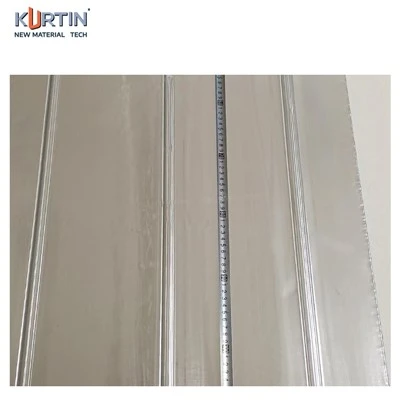
Don’t hesitate to reach out to discuss your specific insulation needs and get tailored recommendations that align with your safety and performance goals.
Underfloor Heating Board References
American Chemistry Council. (2022). Polyisocyanurate Foam: Safety, Health, and Environmental Profile.
U.S. Environmental Protection Agency (EPA). (2021). Low-Emission Building Materials: VOC Standards and Certifications.
National Fire Protection Association (NFPA). (2020). Fire Safety of Rigid Insulation Materials.
World Health Organization (WHO). (2019). Chemicals in Building Materials: Health Effects and Risk Assessment.
International Agency for Research on Cancer (IARC). (2021). Monographs on the Evaluation of Carcinogenic Risks to Humans: Volume 128.
Zhejiang Kurtin New Material Tech Co., Ltd.
As one of the most experienced PIR foam manufacturers and suppliers in China, we offer a wide range of products with superior quality. Please rest assured to wholesale bulk PIR foam made in China here from our factory. We also accept customized orders.
Address: 8th Floor, Unit 1, Building 3, Zhi Di Mansion, Xiaoshan District, Hangzhou City, Zhejiang Province, P.R. CHINA
E-mail: Jeff.jin@kurtin.cn
WebSite: https://www.insulationpanel.net/
