If you’ve ever browsed our gate valves here at [Your Company] and seen numbers like “150#” or “600#” on the spec sheet, you’ve probably wondered: what do those even mean? And more importantly, does the pressure rating really matter for the project you’re working on? I get it—valve specs can feel like a foreign language at first, but once you break it down, pressure ratings for gate valves are way simpler than they sound. Let me walk you through it, straight from the gate valve supplier who actually fields these questions every single day. Gate Valve

First off, let’s cut to the core: the pressure rating of a gate valve is basically the maximum pressure it can handle at a specific temperature without leaking, breaking, or failing. It’s not just some random number a manufacturer pulls out of thin air—this is a standardized measurement used across the industry, mostly to make sure valves work as intended in real-world conditions. If you’re dealing with water pipelines, oil refineries, chemical plants, even HVAC systems, ignoring that rating can lead to big problems. I’ve seen customers try to save a few bucks by going with a lower-rated valve for a high-pressure line, and nine times out of ten, that ends up with a burst pipe or a valve that won’t close properly. Not worth the headache.
Now, let’s talk about the common units you’ll see. Most folks in the US use “class numbers” (like Class 150, Class 300, Class 600) or “pound ratings” (the # symbol, same thing). For example, a Class 150 gate valve is the workhorse for low to medium pressure applications—think residential water lines, small HVAC systems, or general industrial pipelines that run up to around 285 psi at room temp. Wait, hold on—key caveat here: pressure ratings drop when temperature goes up. That’s a mistake a lot of new builders or engineers make. A Class 600 gate valve might handle 1480 psi at 100°F, but if you’re using it for hot oil at 500°F, that number plummets to like 720 psi. Why? Because metals (the body, disc, stem of the valve) expand and weaken when heated. Steel, for example, loses tensile strength as temperature rises, so the valve can’t hold the same pressure it does at room temp. That’s why we always ask customers for two things: what’s the maximum pressure in their line, and what’s the maximum operating temperature. Those two numbers are non-negotiable for picking the right valve.
Let me give you a quick breakdown of the most common gate valve pressure classes we stock, and what they’re used for, just so you have a reference. Class 150: like I said, workhorse for low-pressure stuff. Used in municipal water systems, small commercial buildings, and pipelines that move non-corrosive fluids at low temps. Class 300: medium pressure, goes up to around 740 psi at room temp. This is popular for oil and gas gathering lines, chemical processing that runs at moderate temps, and larger HVAC systems. Class 600: high pressure, maxes out at 1480 psi at room temp. Used in refineries, power plants, and long-haul oil pipelines where pressure is really high. Then there are even higher classes, like Class 900, 1500, and 2500, for extreme applications—like deep offshore drilling or high-temperature steam systems. We don’t keep a ton of the super high ones in stock because they’re pretty specialized, but we can get them fast if a customer needs ’em.
Now, how is this pressure rating actually tested? A lot of people ask if these numbers are just theoretical, but no—they’re the result of rigorous, standardized tests. The main standard we follow (and that all reputable gate valve suppliers use) is API 600, which is the American Petroleum Institute’s standard for steel gate valves. Also, ASME B16.34 sets the rules for pressure ratings for valves across all industries. Here’s what happens during testing: a brand new valve is filled with water, sealed, and pressurized gradually. Testers check for leaks every step of the way, and they make sure the valve can hold pressure for a set amount of time without any permanent deformation (bending, stretching that won’t go back). For example, a Class 150 valve has to pass a hydrostatic test at 1.5 times its rated pressure—so 225 psi, for Class 150—with zero external leaks. If it doesn’t pass, it doesn’t leave the factory. That’s why when you buy from us, you can trust that the pressure rating is accurate, not just a marketing number.
Wait, let’s clear up a common myth: a lot of folks think “gate valve pressure rating is just the static pressure it can handle, not dynamic.” Yeah, static pressure is the pressure when the system is at rest, but dynamic pressure (when fluid is flowing, or there’s water hammer) matters too. Water hammer is that sudden jolt in the line when a valve closes too fast, right? It can spike pressure to 2 or 3 times the normal operating pressure. So if your line runs at 300 psi static, you don’t want a Class 150 valve (max 285 psi at room temp) because water hammer could push that over the edge. We always advise adding a safety factor—usually 25-50% above your maximum operating pressure—to account for things like water hammer, temperature fluctuations, and future upgrades to the system. That’s a free tip we give every customer, no charge.
Let me share a real example from last month, to make this concrete. A guy came to us needing gate valves for a new water line for a small food processing plant. He originally ordered Class 150 valves because that’s what his old system used. But when we asked for his operating numbers, he said the line runs at 320 psi and can get up to 180°F. A Class 150 valve at 180°F only handles around 220 psi—way below what he needed. We suggested Class 300, which at 180°F is still good for about 550 psi, way above his 320 psi with a safety factor. He saved himself from a huge headache—if he’d installed Class 150, the valves would have leaked or failed within a year, and he’d have to shut down the plant to replace them, which is way more expensive than the extra cost of Class 300 valves. That’s exactly why we don’t just sell you a valve—we help you pick the right one for your specific job.
Another thing to consider: valve material. The pressure rating isn’t just dependent on the class number—it also depends on what the valve body is made of. For example, a cast iron gate valve vs. a carbon steel gate valve vs. a stainless steel gate valve. Cast iron is cheaper, but it’s more brittle, so its pressure rating is lower at high temperatures. Carbon steel is stronger, so it can handle higher pressure at the same temp as cast iron. Stainless steel is even better for corrosive fluids, and its pressure rating holds up well across a range of temps. So if you’re moving something acidic, you can’t just go with the highest class valve—you need a stainless steel gate valve, which has its own pressure rating adjusted for both material and temp. That’s another thing we help with: matching material to pressure rating and fluid type.
So, how do you figure out what pressure rating you need for your project? Let’s make a quick checklist, based on what we go through with every customer:
- What’s your maximum operating pressure (in psi or bar)? Don’t forget to account for water hammer or pressure spikes—add 25-50% here.
- What’s your maximum operating temperature? Even a 100°F difference can drop a valve’s pressure rating a lot.
- What fluid are you moving? Corrosive fluids need a different material, which affects pressure rating.
- What size valve do you need? Larger valves (like 12-inch or bigger) sometimes have slightly lower pressure ratings than smaller ones, even the same class. We can adjust for that too.
If you’re still unsure, don’t guess. That’s the worst thing you can do when buying gate valves. We’ve got a team of engineers here who can help you run the numbers, no obligation. We don’t want you to waste money on an overkill valve (though some people do, and that’s fine if you have the budget) or end up with a valve that fails.
Now, let’s address something else: what if you need a gate valve to work at super high temps, like for steam lines? For example, a Class 600 gate valve at 800°F won’t handle 1480 psi—steel weakens a lot at that temp. So we’d recommend a higher class, like Class 900, which at 800°F is still rated for around 580 psi, which is enough for most steam applications. We also stock high-temperature alloy valves for extreme cases, like in power plants where temps hit 1000°F or more.
A common question we get: can I use a higher-rated valve than I need? Absolutely. It’s not a problem, and it actually gives you extra safety if something changes down the line. For example, if you’re building a system that might get upgraded to higher pressure in a few years, going with a slightly higher class now saves you from replacing valves later. The difference in cost is usually minimal compared to the hassle of retrofitting.
Let me also clear up a confusion between gate valves and other valves, just in case. Globe valves, for example, have different pressure ratings, and ball valves too. Gate valves are designed for fully open or fully closed—they’re not for throttling flow, right? So their pressure rating is for when they’re in either position, because they’re not meant to handle partial flow. If you do use a gate valve for throttling, that can cause damage, and also affect the pressure rating? Wait, no—actually, the pressure rating is still the same, but the valve might wear out faster. But that’s a separate topic. The key point here is that gate valve pressure rating is standardized, regardless of type, but you have to make sure the class matches your operating conditions.
Now, if you’re in the market for gate valves, whether it’s for a small residential project or a big industrial plant, here’s the takeaway: don’t just look at the number on the box. Reach out to a reputable gate valve supplier who will ask you about your pressure, temperature, fluid, and application. At [Your Company], we don’t just push the biggest class valve—we work with you to find the sweet spot: a valve that’s safe, durable, and cost-effective for your specific job. We’ve got stock on all the common classes (150, 300, 600) in various materials, and we can source the specialty ones fast for custom projects. If you’re planning a pipeline, a plant upgrade, or just need to replace a faulty valve, get in touch with our team to talk through your needs. We’re here to answer questions, help you spec the right valve, and make sure your project runs smoothly.
Wait, one last thing: a lot of new engineers or DIYers ask why there are different standards. Why not just use one universal number? The answer is that different industries have different needs. Oil and gas uses API standards, plumbing uses NSF standards, power generation uses ASME. All of these tie back to pressure ratings, so the core idea is the same, just slight variations in testing. But as a gate valve supplier, we make sure all our valves meet the relevant standards for your industry, so you don’t have to worry about compliance. No cutting corners, no subpar valves—just reliable, tested gate valves that do what they’re supposed to.
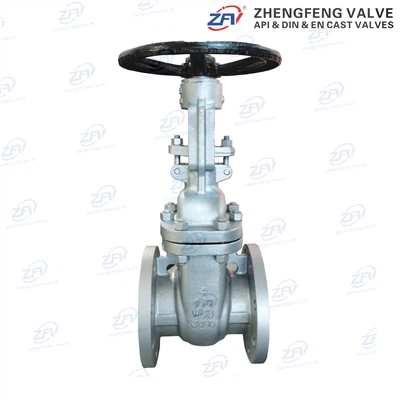
If you’re still stuck on figuring out your pressure rating, or if you just want to browse what we have in stock, don’t hesitate to reach out. We’ve got years of experience working with everyone from small contractors to big refineries, so we can guide you through every step. Pressure ratings don’t have to be complicated—once you know what numbers to look for, and how temperature and material affect them, it’s just a matter of matching the valve to your job.
Concentric Butterfly Valve References:
- American Petroleum Institute (API) Standard 600: Steel Gate Valves, For Oil and Gas Industry, 2020 Edition
- American Society of Mechanical Engineers (ASME) B16.34: Valves—Flanged, Threaded, and Welding End, 2021 Edition
- Hydraulic Institute (HI) Standards for Pump and Valve Pressure Ratings, 2019 Edition
- National Association of Plumbing Officials (NAPCO): Residential Valve Pressure Rating Guidelines, 2022 Edition
Zhejiang Zhengfeng Valve Co., Ltd.
We’re well-known as one of the leading gate valve manufacturers and suppliers in China. With abundant experience, we warmly welcome you to buy bulk advanced gate valve from our factory. If you have any enquiry about cooperation, please feel free to email us.
Address: Hengtong Road, Wuxing Industrial Park, Wenzhou, Zhejiang, China. 325105
E-mail: sales@zfvalve.com
WebSite: https://www.zfvcns.com/
