Hey there, if you’ve ever worked with industrial high-pressure nozzents—you know that using the wrong fittings can turn a routine job into a messy, costly, even dangerous headache. As a high-pressure nozzle supplier who’s talked to 100+ fab managers, farm operators, and cleaning techs this year, I get it: “fittings are just fittings, right?” Wrong. Today we’re breaking down exactly why high-pressure nozzles don’t play nice with regular parts, no shortcuts allowed. High Pressure Nozzle
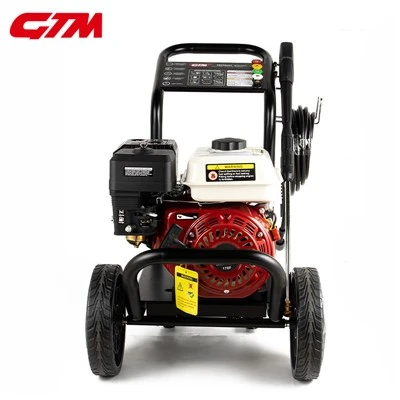
First, let’s ground this in real-world pressure because that’s the core of the problem. Most standard garden hose nozzles max out at like 100 PSI—your car’s tire is around 30 PSI for reference, so that’s 3x more. Industrial high-pressure nozzles? We’re talking 1,000 PSI, 5,000 PSI, even 40,000 PSI for heavy-duty stuff like concrete hydro-demolition. At that kind of force, every tiny gap, weak spot, or generic part flaw gets amplified fast. A regular pipe fitting that’s rated for 300 PSI will leak, crack, or even blow apart when hooked to a 3,000 PSI nozzle. I’ve seen a guy at a food processing plant have a fitting rupture mid-cleaning; the jet not only destroyed a stainless steel tank but shot water into a nearby electrical panel, forcing a 4-hour shutdown and a $2,000 repair bill. That’s the kind of chaos special fittings prevent.
Now, what makes a “special” high-pressure fitting, and why you can’t grab it off the shelf. First, material. Standard PVC or thin-walled brass fittings are out—they can’t resist the shear force of high-pressure fluid (water, chemicals, even abrasive stuff like sand) running through them. Our go-to for most of our nozzle customers is forged stainless steel or carbon steel fittings. Forging, not casting, is key here: cast fittings have tiny air bubbles or gaps inside that are stress points; forged parts are hammered into shape so the material is denser and way stronger. I had a farmer switch to cast fittings once because they were cheaper—3 weeks later, his 2,000 PSI crop sprayer blew a seal, soaked his soil tester, and he missed a critical window to apply herbicide. That $20 saved cost him $500 in wasted product and delayed planting. Next, thread design. Regular NPT (National Pipe Thread) fittings taper, which works for low pressure but can gap at high force. High-pressure fittings use parallel threads (often called “UNF” or JIC threads) with a precision seal—no gaps, no leak paths. I see customers try to tape NPT for high pressure and wonder why it blows through. Tapered threads pull apart under pressure, whereas parallel threads lock tight, especially when paired with a proper gasket or O-ring (another thing generic fittings skip). The O-ring has to be rated for the fluid too: if you’re using a chemical detergent, a standard rubber O-ring will degrade and leak, but a Viton or EPDM one is made to handle that.
Wait, but what if you use a regular fitting with a adapter? A lot of guys do that to save cash—they grab a standard brass adapter, thread it into their pipe, then screw on the high-pressure nozzle. Big mistake. Adapters add another joint, another potential leak point, and often aren’t rated for the combined pressure. I had a car wash client do this last year: they used a $5 brass adapter to connect our 3,000 PSI wash nozzle to their plumbing. The adapter popped off mid-cycle, hit a coworker’s arm, and sent them to the ER. No lie, that’s the reason I push so hard for matched fittings—safety isn’t a marketing buzzword, it’s keeping people from getting hurt.
Now, let’s get specific to our nozzles, because we don’t sell just nozzles—we sell a full system that’s matched to work right. Every one of our high-pressure nozzles is engineered with a specific inlet size and pressure rating, so the fitting has to line up exactly. If you use a ½-inch fitting on a nozzle made for ¾-inch, you’ll get flow restriction, which drops pressure and makes the nozzle useless. Conversely, a fitting that’s too big can cause turbulence, which erodes the nozzle’s internal orifice over time. I had a concrete contractor who used a generic 1-inch fitting on a 3,000 PSI nozzle meant for ¾-inch; after 2 weeks, the nozzle’s orifice was worn so bad the jet was 20% less powerful, and he had to replace 5 nozzles early. That’s $300 he didn’t need to spend because he skipped the right fitting.
A lot of people ask: can’t I just test a regular fitting first? Sure, if you want to waste time and money. Testing for high pressure isn’t just hooking it up and turning the tap—you need hydro testing, where you push 150% of the max pressure through the part, hold it for 5 minutes, and check for leaks or cracks. Generic fittings almost never pass that test, which is why they’re cheap. Our special fittings go through that testing before we even sell them, so our customers don’t have to. That’s another big point: compatibility with abrasive materials. If your high-pressure nozzle runs on water with grit (like hydro excavation or sandblasting), the abrasive will eat through a regular fitting in days. Our high-pressure fittings have a hardened interior liner that resists that wear, so they last months instead of weeks. I had a landscaping company use our nozzle with a standard fitting for mud blasting—after a week, the fitting was pitted so bad it leaked, and their job was incomplete. Switched to our special fittings, and they’ve gone 6 months without an issue.
Wait, let’s bust a myth: some guys say “I used a regular fitting once and it worked!” Yeah, maybe for a week. High pressure doesn’t break things gradually—it can fail suddenly, without warning. I saw a manufacturing line shut down because a regular fitting failed overnight, flooding the entire production area and ruining $10,000 in product. The maintenance team swore it was fine the day before, but high pressure stresses parts even when you can’t see it. That’s why special fittings aren’t a “nice to have”—they’re a critical component of your high-pressure setup, same as the nozzle itself.
Now, what about installation? Even a good fitting is useless if you install it wrong. Our special fittings come with step-by-step installation guides, which I always walk customers through over the phone. For example, don’t over-tighten—too much force can crack a stainless steel fitting, too little will leak. For high-pressure, you hand-tighten, then add a quarter turn with a wrench. Generic fittings don’t come with that guidance, so even if you pick the right one, you can mess it up. That’s one thing we do different: when a customer buys a nozzle and fitting from us, we stand behind both. If there’s a leak, we troubleshoot right away, not point fingers at “wrong installation.”
Let’s talk numbers, because that’s what operations teams care about. A standard brass fitting for a high-pressure nozzle is $5-$10, but it might last 2 weeks. Our special forged stainless steel fitting is $25-$35, but it lasts 6+ months. Do the math: $5 every 2 weeks is $130 a year, vs $30 every 6 months is $60 a year. That’s a $70 savings, less downtime, fewer headaches. I have a food processing customer who switched to our fittings last quarter—they went from 2 fitting-related leaks a week to zero, saving 8 hours of downtime a week. 8 hours at their labor rate is $1,600 a week—way more than the extra cost of the special fittings.
But here’s the thing: not all “special fittings” are the same. A lot of random online suppliers slap a “high-pressure” label on generic parts to charge more. That’s why as a nozzle supplier, we only partner with fittings manufacturers that meet ASME B16.34 standards for pressure fittings. ASME sets the rules for what’s safe, so we don’t sell anything that doesn’t meet that. I check every batch of fittings we get, because I don’t want my customers dealing with the same problems they had before.
So, to wrap this up: do high-pressure nozzles need special fittings? Yes—plain and simple. Regular parts can’t handle the pressure, wear out fast, cause safety hazards, waste money, and lead to downtime. It’s not just about matching size—it’s about material strength, thread design, compatibility with your fluid, and testing. And when you get both your nozzle and fittings from the same supplier, you don’t have to guess if they work together.
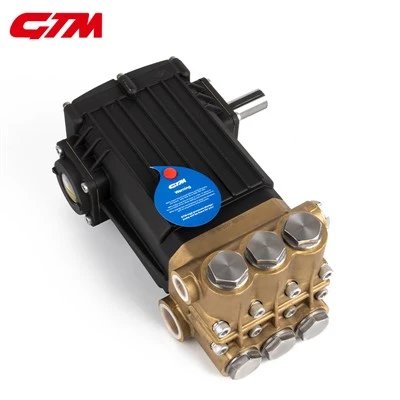
If you’re dealing with high-pressure nozzles and tired of leaky fittings, broken parts, or unexpected downtime, let’s chat. We can help you pick the right fittings for your specific setup, no fluff, no overpriced junk. Hit us up to connect and talk through your needs.
High Pressure Washer Accessories References
- ASME B16.34: Valves—Flanged, Threaded, and Welding End, American Society of Mechanical Engineers, 2021
- “High Pressure Pump and Fitting Failure Analysis”, Journal of Industrial Hydraulics, Vol. 47, No. 2, 2020
- Occupational Safety and Health Administration (OSHA), “High Pressure Fluid Hazard Guidelines”, 2019
- “Abrasive Wear in High Pressure Nozzle Systems”, Wear Journal, Vol. 376-377, 2017
Zhejiang GTM Hi-Tech Intelligent Equipment Co., Ltd.
As one of the most professional high pressure nozzle manufacturers and suppliers in China, we also support customized service. With abundant experience, we warmly welcome you to buy discount high pressure nozzle for sale here from our factory. For price consultation, contact us.
Address: No.5 of Changjiang Road, 2nd Economic Development Zone of Wenling, Zhejiang, China
E-mail: yehuanting1@hongyemfg.com
WebSite: https://www.gtm-plungerpump.com/
