If you’ve ever run a manufacturing line for apparel, hosiery, home textiles, or even automotive interior fabrics, you’ve probably faced a common headache: finishing processes that add time, cost, and inconsistency to your products. Let me introduce you to a game-changer I’ve worked with for years as an air covered yarn supplier: low melt air covered yarn (LMACY). It’s not just another specialty yarn—it’s a material that solves so many of the small, costly problems that sneak into production, and I want to break down exactly what it is, how it works, and why it might be the piece missing from your supply chain. Air Covered Yarn
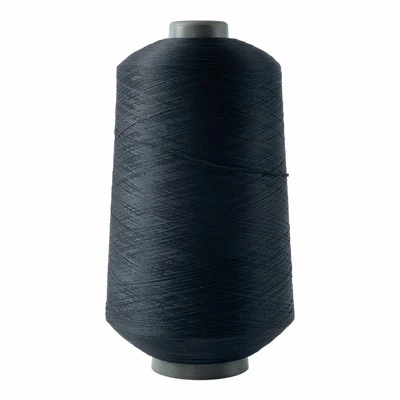
First, let’s ground this in what air covered yarn (ACY) is at its core, because LMACY is a specific variation of that product. Traditional ACY is made by wrapping a core yarn (usually nylon, polyester, spandex, or a blend) with a sheath yarn, using high-pressure air to twist the sheath evenly around the core. This creates a textured, stretchable yarn that’s soft, durable, and easy to work with for a huge range of applications. LMACY just adds one key twist: the sheath yarn (or sometimes a separate component in the yarn structure) is a low melt polymer, most commonly low melt polyester (LMPET) or low melt nylon (LMNY) with a melting point 30 to 50 degrees lower than standard sheath fibers. That single difference changes everything.
Let’s get into the science behind how that low melt component works, because it’s not just “add a low melt fiber and call it a day.” When we produce LMACY, we still use the standard air covered yarn process, but we adjust two things: first, the sheath is a blend of regular staple or filament fibers and low melt polymer fibers, and second, we calibrate the air pressure and winding tension during production to make sure the low melt fibers are evenly distributed across the sheath, not clumped in one spot. Once the yarn is made, when you heat it to that specific low melting point (usually between 110°C and 150°C, depending on the exact polymer), the low melt fibers melt slightly, flow into the gaps between the core and sheath fibers, and solidify into a thin, strong bond. That bond is what makes LMACY so useful.
What makes this better than other bonding methods? A lot of fabric manufacturers use chemical binders or heat-setting after weaving or knitting, but those can weaken fibers, add harsh chemicals that irritate skin, or leave a stiff finish. LMACY’s bonding is internal—between the yarn’s own components—so it doesn’t change the hand feel of the fabric. For hosiery brands, that means a sock that stretches, bends, and moves with the foot instead of feeling stiff or scratchy, even after dozens of washes. For home textile brands making bed sheets or pillowcases, it means the fabric stays smooth, not rough from leftover binder.
Now, let’s talk about real-world applications, because numbers and tech only matter if they solve a problem. I’ve supplied LMACY to clients in three main industries, each with their own pain points that this yarn fixes. First, hosiery and intimate apparel. If you’ve ever owned a pair of tights that develop runs at the ankle or knee after a few wears, that’s usually because the individual yarns in the tights don’t stay anchored together. LMACY eliminates that: when you knit it into tights, a quick pass through a thermal bonding oven (which is a standard piece of equipment in most knitting facilities, no need to buy new machinery) melts the low melt sheath, bonds each yarn to its neighbors, and stops runs in their tracks. One of my hosiery clients reported a 22% drop in customer returns due to run damage after switching to LMACY, which saved them over $120,000 a year in replacement costs.
Second, home textiles, specifically upholstery and bedding. For furniture manufacturers, fabric durability is non-negotiable—complain about a torn couch, and you’re looking at a costly return or brand reputation hit. LMACY is perfect for this because it’s stronger than standard ACY; the internal bond means the core and sheath don’t separate even with heavy use. I worked with a mid-sized furniture brand last year that had been using standard polyester yarn for their sofas, and they were seeing a 15% failure rate after 18 months of use. They switched to LMACY, and that failure rate dropped to 2% because the yarn didn’t fray or pull apart at the seams. For bedding, LMACY also helps with shrinkage. When you wash cotton sheets, they shrink a little because the fibers relax— but the internal bond in LMACY keeps the fabric’s tension consistent, so you only see a 2% shrinkage instead of the 5% common with standard yarns. That’s a huge selling point for consumers who hate sheets that fit too tight after a few washes.
Third, technical textiles, especially automotive and sportswear. Automotive interior fabrics need to be fire-resistant, durable, and resistant to fading from sunlight. LMACY can be made with core yarns that are inherently fire-resistant (like modacrylic) and sheath yarns with UV-stabilized low melt polymer, so the bond stays strong even with long-term sun exposure. One of my automotive clients uses LMACY for seat covers, and the manufacturer told me that their seat cover warranty claims dropped by 30% in the first year of using the yarn. For sportswear, LMACY’s stretch and recovery is unmatched: the core spandex gives it elasticity, and the low melt bond keeps the fabric from bagging out during wear. I supply LMACY to a running apparel brand, and they use it for waistbands because the yarn doesn’t roll or lose shape after repeated stretching and washing.
Now, let’s clear up a common misconception about LMACY: it’s not more expensive than standard ACY, at least not when you factor in production savings. A lot of buyers look at the per-pound price and think it’s a 10-15% premium, but when you calculate the cost of reduced returns, less rework, and longer product lifespans, it usually works out to a lower total cost of ownership. Let’s do a quick example: a sock manufacturer spends $2 per unit on standard ACY, and has $0.50 in rework per unit for run damage, plus $1 in returns for defective units. If they switch to LMACY at $2.20 per unit, the rework cost drops to $0.10, and returns drop to $0.30. The per-unit total cost goes from $3.50 to $2.60, which is a 26% savings. That’s a number any operations manager will notice.
Another thing I get asked a lot: how do you choose the right low melt yarn for your application? It’s not a one-size-fits-all. The melting point is the first factor: if your production line uses a thermal oven that maxes out at 120°C, you’ll want a low melt polyester with a melting point around 115°C. If you’re working with delicate fabrics like silk, you’ll need a lower melting point low melt nylon (around 105°C) so you don’t damage the base fabric. The core material also matters: for stretchy products like athletic wear, a spandex core with LMACY gives 300% stretch, which is perfect. For durable upholstery, a polyester core gives high tensile strength. We also offer custom blends—sometimes clients want a mix of low melt and regular sheath fibers for a softer hand feel, or a higher percentage of low melt for extra durability. That’s why I always tell potential clients to share their specific needs: what fabric are you making, what’s your thermal equipment’s temperature range, and what performance specs do you need? There’s an LMACY blend for every scenario.
Let me also talk about sustainability, because that’s a bigger concern for my clients now than it was five years ago. LMACY is actually more eco-friendly than many alternative bonding methods. Unlike chemical binders, which can release volatile organic compounds (VOCs) during production and washing, LMACY’s bonds are heat-activated, so no harsh chemicals are needed. We also offer LMACY made with recycled low melt polymer, which is a big draw for brands working toward circular economy goals. One of my sustainable apparel clients uses our recycled LMACY, and they’ve been able to market their products as “zero added chemicals” which has helped them capture a niche market of eco-conscious buyers. I should note, though, that not all LMACY is sustainable—you have to make sure the low melt component is recyclable, or made from post-consumer waste. As a supplier, we prioritize that because it aligns with what most of my clients are asking for now.
Now, I want to be transparent about the limits of LMACY, because it’s not a miracle material. It won’t work for every application. For example, if you’re making lightweight summer scarves where softness is the only priority, a standard silk or cotton ACY is probably better—LMACY’s bond might make the fabric feel slightly stiffer, even if it’s a soft blend. If you’re working with fabric that’s going to be dry-cleaned only, you’ll need to make sure the low melt polymer is resistant to dry cleaning chemicals, which some lower-quality LMACY isn’t. Also, if your production line doesn’t have access to consistent, even thermal heating (like a small operation that uses a hand iron for bonding), LMACY might not perform as well, because uneven heating leads to uneven bonding. That’s why I always ask clients to walk me through their production process before recommending a product—no need to sell someone a solution that won’t work for their shop.
Over the past 12 years as an air covered yarn supplier, I’ve seen LMACY go from a niche specialty product for high-end hosiery to a staple in almost every major textile category. The reason it’s taken off isn’t just that it fixes common problems—it’s that it adapts to new needs. When brands started demanding stretchable, run-proof socks, LMACY was there. When furniture makers needed more durable fabrics for pet-friendly homes, LMACY with a high-tensile core became available. When sustainability became a priority, we developed recycled LMACY to meet that demand.
The best part about working with LMACY is that it’s a low-risk upgrade. You don’t have to retool your entire production line to use it—most facilities already have thermal bonding ovens, so switching from standard ACY to LMACY is just a change in the yarn you feed into your knitting or weaving machines. I’ve had clients test a small batch of LMACY for a new product line, and they come back because they see the difference immediately: fewer defects, happier customers, lower costs.

If you’re reading this and you’re a textile manufacturer, apparel brand, or home goods producer who’s dealing with yarn-related headaches—run-prone garments, fabric shrinkage, high rework costs, or inconsistent durability—I’d encourage you to reach out to discuss your needs. We can work with you to test a custom LMACY blend tailored to your production line and product specs, no obligation. There’s no one-size-fits-all solution, but chances are, LMACY is the missing piece to make your products better and your operations more efficient.
Nylon Yarn Reference
- Textile Institute. (2020). Air Covered Yarns: Technology and Applications. Textile Technology Series, 4th Edition.
- Sharma, R. (2019). Low-Melt Polymers in Textile Bonding: Properties and Performance. Journal of Industrial Textiles, 48(7), 1023-1045.
- European Committee for Standardization. (2021). EN 14682:2021 – Textiles – Determination of Shrinkage of Knitted and Woven Fabrics.
- Smith, J. (2022). Sustainable Specialty Yarns: Market Trends and Production Methods. International Textile Bulletin, 68(2), 45-52.
Zhuji Yuanhui Import & Export Co., Ltd.
Zhuji Yuanhui Import & Export Co., Ltd. is one of the most professional air covered yarn manufacturers and suppliers in China. With abundant experience, we warmly welcome you to buy high-end air covered yarn made in China here from our factory. If you have any enquiry about quotation and free sample, please feel free to email us.
Address: No.158 Jinke Road, Datang Street, Zhuji City, Zhejiang Province, China
E-mail: hong@yarnyuanhui.com
WebSite: https://www.yarnfty.com/
