I’ve been getting a lot of questions lately from both our retail customers and industrial clients – people plugging in our battery chargers and coming back confused, frustrated, even a little mad because their circuit breaker trips right as they hit the “charge” button. Let me start by saying this isn’t a flaw in our chargers. I’ve been in the battery charger business for 12 years, and I’ve seen every version of this problem, from a kid tripping his garage breaker charging a toy RC car battery to a manufacturing plant shutting down a whole assembly line because of a 48V forklift charger. Most of the time, it’s not us – it’s how the charger interacts with your circuit, your wiring, even the other devices plugged into that same breaker. Let’s break this down, plain and simple, no overly technical jargon, because that’s the stuff that gets lost when you’re staring at a tripped breaker at 7 a.m. trying to get a work van back on the road. Battery Charger

First, let’s talk about what actually happens when you turn on a charger. A battery charger isn’t like a lamp that draws a steady 10 watts the second you plug it in. It’s a switch-mode power supply (SMPS) – that’s the standard for every modern charger, from the tiny one for your laptop to the heavy-duty ones we build for golf carts and electric pallet jacks. SMPSes work by switching electricity on and off thousands of times a second to adjust the voltage going to the battery. When that switch flips on, it draws a huge, temporary burst of current – that’s called inrush current. Most standard circuit breakers are designed to handle normal current, but that inrush spike is designed to be very short – like 10 to 20 milliseconds. But here’s the catch: not all breakers are equal.
For example, a standard 15-amp circuit breaker for a home garage is rated for continuous current, but its trip curve – the amount of current that will make it flip – means it can’t handle an inrush spike much higher than 15 amps for that tiny window. Our 12-volt 10-amp automotive charger draws an inrush peak of about 22 amps when it first turns on. That’s over the limit for a 15-amp breaker, even if the steady current when it’s actually charging is only 10 amps. I’ve seen this so many times: someone plugs our charger into the only available outlet near their workbench, which is on a 15-amp breaker, and the first press of the button sends the 22-amp spike straight into the breaker’s trip zone. It doesn’t matter that the charger only pulls 10 amps after that – the breaker sees the spike and trips. That’s not a defect; that’s a basic electrical design mismatch.
Then there’s the problem of shared circuits. A lot of people plug their chargers into outlets that are on the same breaker as other high-current devices. Let’s say your garage has one 20-amp breaker that powers your fridge, your power tools, and that work van charger you bought from us. The fridge alone draws about 7 amps when it runs, your angle grinder pulls 12 amps, and now add the charger’s 10-amp steady current – that’s 29 amps total, way over the 20-amp limit. But wait, why would that trip the breaker when you only turned on the charger? Because the fridge and grinder are already drawing near their continuous current just sitting or running, and the charger’s steady load pushes it over. But sometimes, it’s even the inrush from those other devices. That fridge’s compressor also has inrush current when it kicks on, and if it’s happening at the exact same time as the charger’s inrush, that combined spike can trip the breaker even if the total steady load is under the limit. I once had a customer who kept tripping a breaker for his fleet charger; turns out he had 3 other chargers on the same circuit, each with their own inrush spikes adding up to 50 amps. That was a wiring problem, not a charger problem, but it took us two trips to test the circuit before he got it.
Wiring is another big one, and it’s something most people don’t think about until their breaker trips. Older homes or shops often have wiring that’s not rated for the load you’re putting on it. For example, a lot of 1970s homes have 14-gauge wire, which is rated for a maximum of 15 continuous amps. If you’re running a 10-amp charger on 14-gauge wire that’s already been fished through 50 feet of attic to get to your garage, the voltage drop along that wire means the charger’s inrush spike is actually higher because the wire can’t deliver current as efficiently. That extra resistance turns a 22-amp spike into a 25-amp spike, which is more than the breaker can handle. Also, loose wire connections – either at the breaker panel or at the outlet – create what’s called “resistance heating.” That heating makes the breaker trip faster, even if the total current is within its rating. I had a customer last year who swore our heavy-duty forklift charger was faulty; we sent a tech out, and he found a loose neutral wire at the breaker panel that was adding 3 extra amps to the load, making the breaker trip on every charge. We fixed the connection, no part replacement needed, and he didn’t have to return the charger.
Now, let’s talk about specific charger types, because some are way more prone to tripping breakers than others. The trickle chargers – wait, no, those are actually lower, but the fast chargers, especially for lithium-ion batteries, have way higher inrush current than lead-acid chargers. We make a 24-volt 50-amp fast charger for electric bikes that has an inrush peak of 75 amps. That’s a massive spike, and if you plug that into a 50-amp circuit, you might think it’s enough, but the inrush is so high it can still trip the breaker. Also, some cheap chargers from other brands cut corners on their inrush suppression – they don’t have the capacitors or resistors that smooth out that initial current spike. Ours all have built-in inrush current limiting, because we test every single model to make sure it doesn’t trip standard breakers unnecessarily, but even our chargers have a limit. If your circuit is already at its max, even a smooth spike can trip it. I’ve had a competitor’s customer bring back their faulty charger only to find out it was our charger they tried, and their breaker was too small – they just couldn’t admit that the problem was their circuit, not the charger.
There’s also a common misconception that you can just replace the breaker with a higher amp one to fix it. Don’t do that. Circuit breakers are there to protect your wiring, not just your devices. If you put a 30-amp breaker on a circuit wired for 15 amps, you’ll be at risk of the wire overheating and starting a fire. I’ve seen this go wrong – a guy on a farm replaced his 20-amp breaker with a 50-amp one to run our combine charger, and the old 14-gauge wire melted behind the wall, almost burning down his barn. That’s a huge mistake. Instead of upsizing the breaker, you should either run a new circuit with thicker wiring, plug the charger into a dedicated circuit (no other devices), or use a charger with a lower inrush rating. We make a line of “low-inrush” chargers specifically for this – they cut that initial current spike by 60% so they work on smaller circuits. A lot of our residential customers swear by these, because they don’t have to rewire their garages.
Another thing to check: the battery’s state of charge. If a battery is completely dead – like, it’s been sitting for months and is at 10% or less – the charger has to put out a lot more initial current to wake it up. That extra current can push the total draw over your circuit’s limit. I had a customer who tried charging a dead lawn mower battery and kept tripping his breaker; when he tested the battery, it was only 8 volts, way lower than the 12.6 volts a fully charged lead-acid battery should be. Once he used a separate maintainer to get the battery up to 10 volts, our charger worked perfectly, no trips. That’s not a charger fault either; that’s the charger doing its job, pulling extra current to revive a dead battery.
So, what should you do if your charger is tripping the breaker? First, rule out the easy stuff. Unplug all other devices from that circuit before plugging in the charger. If it stops tripping, you know the shared load was the problem. Second, test the circuit: look at the breaker rating (it’s printed on the switch, usually 15, 20, or 30 amps) and calculate the total current draw of everything on that circuit when it’s all running. If your charger draws 10 amps and the other devices draw 12 amps, that’s 22 amps on a 20-amp circuit – you’re over the limit, so that’s why it trips. Third, check the wiring: if it’s an older building, call an electrician to test the wire gauge and connections. Fourth, if it’s still tripping after that, it might be the charger – though that’s rare. We test every charger for current spikes, so if you have a unit that’s tripping breakers on multiple circuits, it could be a faulty component, and we’ll replace it no questions asked.
I’ve built our business on making chargers that work reliably, but I also know that a lot of people don’t understand how their electrical system works. That’s why we don’t just sell chargers – we help our customers troubleshoot these problems for free, no extra charge. I’ve spent hours on the phone with a customer in Texas who couldn’t figure out why his RV charger kept tripping, walking him through unplugging his TV, his space heater, his microwave, until he found out the circuit was only 15 amps for the whole RV. We sent him a low-inrush charger that fits the circuit, and he’s been happy ever since. That’s the kind of service we don’t cut corners on, because at the end of the day, if your charger works, you’ll come back, and you’ll tell your friends.
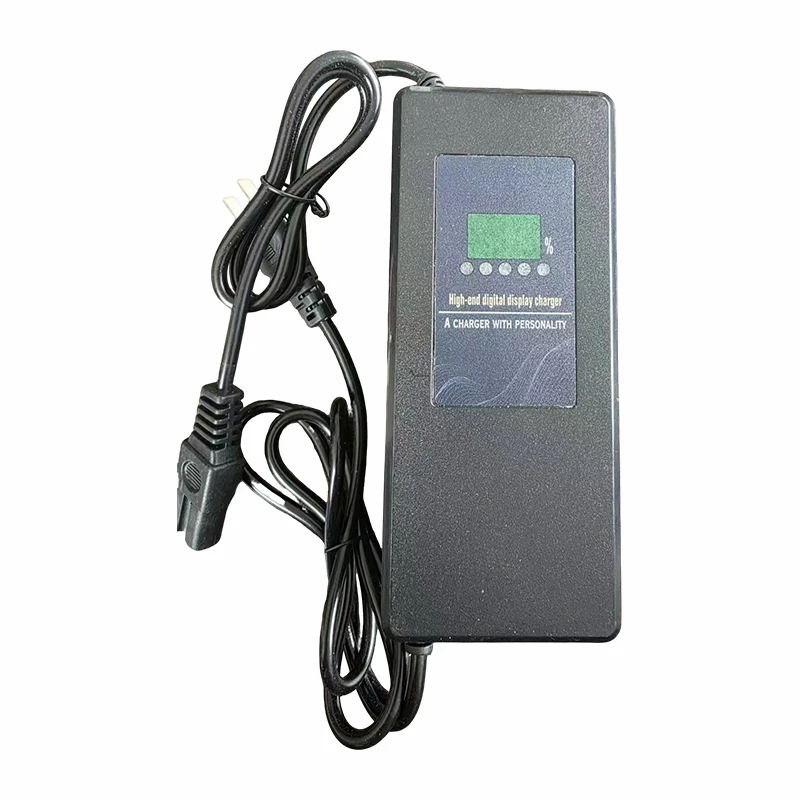
If you’re dealing with a tripping circuit breaker and your battery charger, don’t guess and don’t replace parts randomly. We have the expertise to help you figure out if it’s a circuit issue, a wiring issue, or even a faulty charger. Whether you’re a homeowner with a garage full of tools, a small business with a fleet of electric carts, or a warehouse with industrial chargers, we can walk you through the steps to fix it. Just reach out to our sales team to discuss your specific setup, and we’ll help you find the right solution – whether that’s a dedicated circuit, a low-inrush charger, or a simple wiring check.
Battery Charger References:
- International Electrical Testing Association. “Residential and Commercial Electrical Circuit Safety Standards.” 2022.
- U.S. Consumer Product Safety Commission. “Avoiding Electrical Hazards in Homes and Workshops.” 2021.
- Switching Power Supply Design, 3rd Edition, Abraham I. Pressman, McGraw-Hill Education, 2008.
- National Electrical Manufacturers Association. “Performance Standards for Battery Chargers for Automotive and Industrial Use.” 2020.
Tianchang Hengze Technology Co., Ltd.
With abundant experience, we are one of the most professional battery charger manufacturers and suppliers in China. Please rest assured to buy bulk battery charger made in China here from our factory. If you have any enquiry about quotation, please feel free to email us.
Address: No.8 Sanxing Road, Qinlan Town Industrial Park, Tianchang City, Chuzhou City, Anhui Province, P.R. China
E-mail: 604894957@qq.com
WebSite: https://www.hengzebc.com/
