Hey folks, if you’ve been hanging around the power grid space lately, you’ve probably heard the term “smart distribution transformer” thrown around a ton. As a supplier of these bad boys, I get asked all the time: “What makes these things different from the clunky, decades-old transformers my dad used to deal with? Aren’t they just regular transformers with a fancier label?” Nope—they’re way more than that. The biggest game-changer here? Security. Let’s break down the actual security features that keep these transformers (and your whole grid) from going sideways, no stuffy corporate jargon, promise. Smart Distribution Transformer
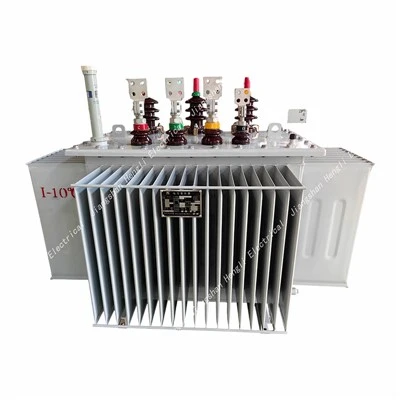
First off, let’s get one thing straight: traditional transformers were basically “set it and forget it” until something broke. You’d drive out, check oil levels, replace a fuse, and call it a day. But today’s grid is way more connected—we’ve got solar panels on rooftops, EV chargers popping up on every block, all kinds of smart devices talking to each other. That connection is awesome for efficiency, but it also opens up attack routes, like how your home Wi-Fi is cool until someone hacks your Ring doorbell. Smart distribution transformers (SDTs) have to fix that gap, and they do it with layered security, not just one trick.
Let’s start with access control. When I first got into this business, I’d hear horror stories about guys just walking up to a transformer, plugging a random laptop into the port, and getting full access. Wild, right? Now, every SDT I supply has a zero-trust access model baked in. No “guest accounts” with generic passwords, no backdoors that manufacturers leave open. Every person—whether it’s a line worker logging in to check data, an engineer tweaking settings, even our own team doing remote diagnostics—needs unique, multi-factor authentication (MFA). Like, they not only type in a password but also use a physical key fob or a one-time code sent to their work phone. And here’s the kicker: if someone tries to log in 3 times with the wrong info, the system locks them out automatically, and sends an alert to our 24/7 operations team. No more sketchy, unmonitored access.
Next, data encryption. These transformers are chattering all day—they’re sending data on load levels, temperature, oil health, even how much power’s going to each neighborhood. All that data is sensitive, right? If a bad actor intercepted that, they could figure out when a substation’s quiet, plan a theft, or even mess with voltage to knock out power. So every single bit of data the transformer sends—whether it’s over cellular, Wi-Fi, or a private power grid network—is end-to-end encrypted. We use AES-256, which is the same standard the US government uses for top-secret stuff. And we don’t just encrypt data in transit—when it’s stored on the transformer’s local memory, that’s encrypted too. No one’s pulling a USB drive off the transformer and grabbing sensitive grid data anymore. I’ve had customers ask, “Why so overkill?” and my answer is always: when someone’s counting on your grid to run hospitals, water treatment plants, and grocery stores, overkill isn’t overkill.
Then there’s threat detection, built right in, not just a afterthought. Your phone has antivirus, right? SDTs have that, but way more tailored. They’ve got little sensors and algorithms that watch for weird behavior—like, if the transformer suddenly starts sending data at 3 a.m. when it’s never done that before, or if a device that’s never accessed it before tries to connect. The system flags that immediately. Our team gets a ping, we check in, and most of the time, it’s just a line worker with a new laptop—we can log in remotely and verify it, no need to dispatch a truck for nothing. But if it’s a real threat? The system kicks the unauthorized device off the network automatically, logs all the details, and sends a full alert. This isn’t some generic antivirus that misses small anomalies; we train the algorithms on our actual grid data, so they know what’s normal for every SDT we sell.
Another big one: physical security that’s digital, too. Wait, I know transformers are already in locked bins, but smart ones take that up a notch. They’ve got tamper detection sensors. If someone tries to pry open the transformer’s control panel, yank out a cable, or even move the whole unit, the sensor triggers an alarm, sends a GPS location to our ops team, and even takes a snapshot with a tiny hidden camera (discreet, I promise) to show who’s there. Even if a bad actor gets inside the bin, they can’t mess with the software without triggering the MFA we talked about earlier. And here’s a feature that’s saved customers a ton: if a power outage happens, the transformer’s security system stays powered for 72 hours on a built-in backup battery. No cutting power to the alarm mid-hack.
Wait, let’s not forget about firmware security. How many times have you updated your laptop or phone to fix a bug that was a security hole? Same thing with SDTs. Old transformers never got updates—if there was a flaw, you had to swap the whole unit, which costs a fortune and takes days. Now, our SDTs have over-the-air (OTA) firmware updates, but they’re super secure. We don’t just push an update—we sign every update with a unique digital certificate, so the system knows it’s actually coming from us, not some random hacker. It also lets you schedule updates during off-peak hours, like 2 a.m. on a Sunday, so you never have to take the transformer offline during rush hour. And before we roll out any update to a customer’s SDT, we test it on our own test grid for weeks—no rushed patches here.
Oh, and for the grid operators out there who are worried about integration: we built our SDTs to play nice with existing SCADA and IoT platforms, but with a security layer in between that blocks unauthorized access to the whole grid. It’s like a bouncer at a club—only the approved devices get in, and everything else stays out. We’ve had customers tell us they were scared adding smart devices would make their old system vulnerable, but our security layer fixes that. We also do regular security audits, both internal and third-party, to make sure we’re not missing anything. No cutting corners here.
Now, I know what some of you are thinking: “This sounds great, but what if there’s a breach?” Our SDTs have incident response built in, too. The system logs every single action—who accessed it, when, what they did, even if they tried to run a command that’s not allowed. That log is stored securely, and we can use it to figure out exactly what happened if there’s an issue. Plus, every SDT has a backup of its core settings, so if something does go wrong, we can restore it in minutes, no long downtime. We also work with every customer to make a custom incident response plan, tailored to their grid size and needs. Small utility? We’ve got a plan for that. Big metro area with millions of customers? We’ve got that covered too.
At the end of the day, security isn’t just a feature we add on—it’s the foundation of every smart distribution transformer we build. The last thing anyone wants is a power outage caused by a hack, right? Hospitals can’t run on generators forever, gas stations can’t pump fuel, people can’t charge their EVs (or their phones) to call for help. That’s why we don’t cut corners on security, even if it adds a little time to manufacturing or a bit to the upfront cost—trust me, it’s worth it when your grid is safe and reliable.

If you’re a utility manager, a grid operator, or someone who’s tired of dealing with outdated, insecure transformers, and you want to upgrade your grid with SDTs that actually have your back when it comes to security, hit us up. We can walk you through our specific models, answer any questions you have, and even set up a demo so you can see these security features in action. Let’s build a smarter, safer grid together—no complicated stuff, just real solutions that work for you.
Rectifier Transformer References
- North American Electric Reliability Corporation (NERC). (2022). “Cybersecurity Standards for Bulk Power System Assets.”
- International Electrotechnical Commission (IEC). (2021). “IEC 62351: Power Systems Management and Associated Information Exchange – Data and Communications Security.”
- Institute of Electrical and Electronics Engineers (IEEE). (2020). “IEEE C57.154: Standard for Smart Distribution Transformers.”
- U.S. Department of Energy (DOE). (2023). “Smart Grid Security: Transformer Cybersecurity Best Practices.”
Zhejiang Jiangshan Hengli Electrical Co., Ltd.
Zhejiang Jiangshan Hengli Electrical Co., Ltd. is one of the most professional smart distribution transformer manufacturers and suppliers in China, featured by quality products and low price. Please rest assured to wholesale cheap smart distribution transformer in stock here and get pricelist from our factory. Customized orders are welcome.
Address: 212 Fuzhu Street Sidu Town, Jiangshan, Zhejiang, China
E-mail: henglijs@foxmail.com
WebSite: https://www.henlypower.com/
