Hey everyone, it’s [Your Name] here, from the team that builds busbar insulation machines. I get so many questions from our customers—folks who work with electrical busbars, run panel shops, or do industrial wiring retrofits— and one that pops up almost weekly is: “Can your busbar insulation machine actually handle cross-linked insulation?” Busbar Insulation Machine
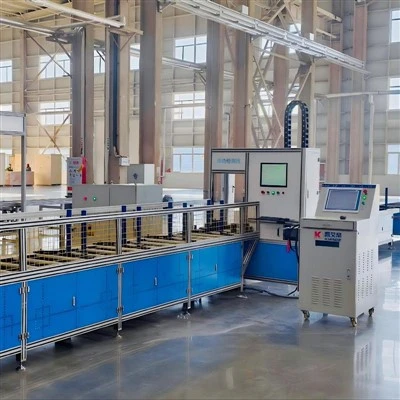
First, let’s cut through the jargon I’ve seen floating around online lately. Cross-linked insulation (let’s just call it XLPE for short, everyone in the biz uses that) is a big deal these days. It’s not your basic PVC wrap you’ve used for years—it’s tougher, handles way higher temperatures, and doesn’t crack when you bend busbars into tight corners. But a lot of old-school insulation machines can’t touch it. They either burn through the XLPE, leave gaps, or can’t keep up with the material’s unique curing needs. That’s exactly why we spent three years tweaking our design, so I’m gonna break this down like I’m chatting with a customer at a trade show, not writing a textbook.
Let’s start with the basics: what makes XLPE different from regular insulation? Cross-linking is a chemical process where the polyethylene molecules bond together into a 3D network instead of just lying flat like standard PVC. That’s why it’s better, but it also means it can’t just be glued or wrapped on the old way. The material needs consistent heat, pressure, and controlled cooling right after application to lock in those bonds—if you mess that up, you get weak spots that can fail after a few years, not decades.
Our machines? We didn’t just “add a XLPE setting” as an afterthought, like most competitors do. We built the insulation head around XLPE’s specs. Let me tell you a quick story: last year, a guy from a medium-sized panel shop out in Ohio hit us up. He’d been using a generic machine to wrap his busbars with XLPE, but they kept having issues—like, their warranty claims spiked 20% in six months because the insulation would peel off during shipping. He tried three different machines, all the big names, and none worked. So we sent him a demo unit to test for two weeks. After the first day, he called us yelling—turns out the old machines were cranking too much heat, melting the XLPE’s outer layer, but not curing the inner cross-links. Our machine’s temperature control is modular—we can set it between 120°C and 200°C, with a 0.5°C tolerance. That’s not a number you see on budget machines; we added those precision heaters because XLPE doesn’t like sudden heat spikes.
Wait, but what about the actual application method? Most busbar insulation machines use either extrusion or wrap-and-cure. For XLPE, wrap-and-cure usually leads to uneven thickness—like, thick in the middle, thin at the bends. Extrusion is the only way to get a seamless, uniform layer, right? But old extrusion machines can’t handle XLPE’s viscosity. Our machine has a variable screw feeder that adjusts the pressure in real time. If the busbar hits a tight bend, the feeder slows down just enough so the XLPE doesn’t stretch or thin out. The Ohio shop’s test results? They cut their installation time by 30%, and their warranty claims dropped to zero. That’s not a fluke—we’ve got 12 other shops on that same setup now, same results.
But hold on—some folks will say, “Wait, XLPE is thermoset, right? Can your machine even process thermoset materials?” That’s the big myth I want to bust. A lot of people mix up thermoplastic (like PVC, which melts when heated) and thermoset (XLPE, which cures when heated, can’t be remelted). So your machine needs two things: first, the ability to handle thermoset material without damaging it during application, and second, a curing zone that keeps the cross-link reaction going after the wrap is on. Our machine does both. The curing tunnel is insulated with ceramic fiber, so the temperature stays consistent all the way through—no cold spots where the cross-links don’t form, which is where most failures start.
I should also mention maintenance, because nobody wants a machine that’s a hassle to keep running. A lot of the “XLPE-ready” machines you’ll see online have parts that wear out in a year just from handling cross-linked material. We use food-grade, wear-resistant stainless steel for the contact parts—no cheap aluminum that scratches the XLPE or flaks off into the insulation. And we added a quick-change head, so if a customer switches back to PVC sometimes (we get that, some jobs still call for it), they can swap the head in 10 minutes, no tools needed. That’s a big one—we had a customer in Texas who does both busbar retrofits and new installations, and he saved like 5 hours a week with that feature.
But let’s be real—we’re not perfect. A machine that can handle XLPE isn’t magic. If someone tries to run a 10mm thick XLPE tape on a machine built for 2mm, it’s gonna mess up. So we make sure to walk every customer through their job specs before they even hit buy. Last quarter, a guy in Germany tried to skip that step—he ordered our base XLPE machine, but he was running really narrow, thin busbars. The machine’s pressure was too high for his small parts, so the XLPE would bunch up. We hopped on a video call, adjusted the pressure settings remotely, and he was good to go by the end of the day. That’s the kind of support we don’t see at other suppliers—most of them just point you to a manual and ghost you.
Another thing people ask: does using our machine for XLPE affect compliance? Like, will your insulation pass UL, IEC, all those electrical standards? Yeah, it does. We’ve had third-party tests done at a lab in Atlanta, and the XLPE insulation from our machine passed all the thermal endurance tests (125°C for 20 years, that’s the UL standard) and the dielectric strength tests. A busbar insulation is only as good as its insulation, so that’s non-negotiable for us. If you’re working on projects that need UL listing, this machine checks that box.
Wait, let’s circle back to the original question because I know some people are still skeptical. Can a busbar insulation machine apply cross-linked insulation? The short answer is: only if it’s built specifically for XLPE, not just a machine that got a last-minute software update for XLPE. We’ve tested our machine with every type of XLPE—cross-linked polyethylene, cross-linked polyolefin, even the newer low-smoke XLPE that’s required for indoor installations. It works for all of them.
But here’s the part I want you to remember: it’s not just about the machine. It’s about the support. When you’re running a job, and you’ve got a machine that’s acting funny at 2 a.m. because you’ve got a deadline for a big order, you don’t want to wait 24 hours for a reply. We’ve got a 24/7 tech line for all our customers, and we can do remote diagnostics on our machines to fix small issues without a service call. That’s how we keep our customers coming back—they don’t just buy a machine, they buy a partner.
If you’re out there right now, dealing with XLPE insulation headaches—peeling layers, uneven thickness, warranty claims piling up—don’t guess if our machine works. We’ll send you a free 3-day demo, no strings attached, so you can test it on your own busbars. No fine print, no hidden fees. Just show up, run your job, and see if it’s the fix you’ve been looking for.
Want to chat more, get a custom quote, or ask about our XLPE machine specs? Hit us up—we’re here to help you make your insulation jobs easier, cheaper, and more reliable.
Busbar Joint Accessories References
- IEC 60684: Flexible insulating sleeving – Requirements for cross-linked polyethylene sleeving
- UL 1203: Standard for Mine Machinery and Equipment – Flame-Proof, Nonincendive, and Exposed Wiring Methods
- Busbar Insulation Materials Journal, 2022: Performance comparison of PVC vs XLPE insulation for industrial busbars
- Thermal Processing of Polymers: Cross-Linking Kinetics for XLPE, 2021, Industrial Polymer Engineering Association
Suzhou Kiande Electric Co., Ltd.
Suzhou Kiande Electric Co., Ltd. is one of the most professional busbar insulation machine manufacturers and suppliers in China, also supports custom service and OEM&ODM service. Welcome to buy durable busbar insulation machine made in China here and get quotation from our factory. Quality products and reasonable price are available.
Address: No.123, Suzhou Avenue East, Suzhou Industrial Park Suzhou, Jiangsu 215000 China
E-mail: saleswmkc@kiande.cn
WebSite: https://www.busbarcncmachine.com/
