If you’re a fire cabinet manufacturer running a continuous production line, you know that the right marketing doesn’t just land a sale—it builds long-term trust with clients who need reliable, code-compliant safety equipment. For years, I’ve worked on the front lines with production lines like ours, adjusting strategies to connect fire cabinets to the people who actually need them: school facilities managers, warehouse operations leads, hospital maintenance teams, and municipal public works departments. Too many manufacturing teams assume marketing ends at the factory gate, but that’s where the gap between a good product and a successful business lies. Below, I’ll break down the tactics that have moved our fire cabinets from a obscure line item to a go-to solution for dozens of facility operators across the region. Fire Cabinet Manufacturing Line
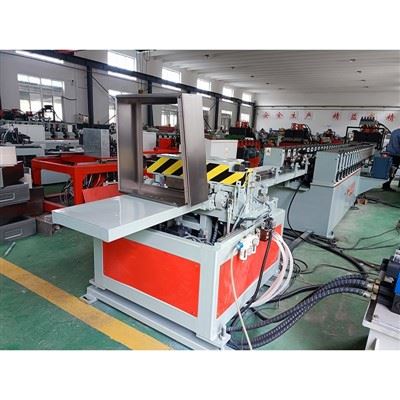
First, start with your production line’s unique value as a sales tool, not just a factory process. When I first started leading our production team, I thought our line was just a way to build cabinets faster—until a fire marshal stopped by and noted that consistent, uniform construction from a line eliminated the “one-off” flaws he’d seen in custom-built units. That’s when I realized our line itself is our biggest differentiator. Unlike small custom shops that might cut corners to meet tight deadlines, a production line for fire cabinets brings precision every single time: welds are consistent, fire-resistant materials are applied in exact layers, and each unit goes through the same pressure test. We’ve turned that into a core marketing angle, not just a internal process. For example, instead of showing generic photos of cabinets on our website, we share behind-the-scenes clips of our line’s automated laser cutting stations, quality checkpoints at every shift, and a 30-second reel of a cabinet passing a 2-hour fire resistance test (a key metric for commercial codes). When a facility manager tells us they’ve had bad experiences with cabinets that fail inspection mid-project, that line reel stops them cold. It’s not just a product—it’s a promise of consistency, which is non-negotiable for safety equipment.
Next, target the right decision-makers with content that solves their specific pain points, not just product specs. A common mistake manufacturers make is leading with technical jargon—“our cabinets meet NFPA 70E and UL 8,” which is true, but not helpful. Facility managers don’t care about standards; they care about avoiding fines, reducing downtime, and keeping their teams safe. So we structure our marketing to speak directly to those pain points. For school facilities managers, we write a case study about how our line-produced fire cabinets cut their annual inspection time by 15% because every unit has identical labeling and pre-drilled mounting holes, so inspectors don’t waste time measuring or verifying inconsistencies. For warehouse operators, we create a one-page checklist comparing our cabinets to competitors: our line’s 12-gauge steel frame is 20% thicker than most entry-level units, and the automated paint process prevents corrosion in high-humidity storage areas. We don’t waste time on general social media posts about “great fire cabinets” — instead, we share that checklist in warehouse operations groups on LinkedIn, and tag the facilities managers who post about equipment upgrades. It’s a small shift, but it turns passive scrolling into active leads, because you’re not selling a product—you’re solving a problem they’re already talking about.
Then, lean into third-party validation to build credibility that beats any sales pitch. When a fire cabinet comes off a production line, it’s easy to say it’s reliable, but independent validation is what makes a prospect pull the trigger. For our business, that means two key things: working with local fire marshals to host quarterly tours of our production line, and publishing the results of every third-party test we run. We invite local municipal safety teams, school district maintenance leads, and warehouse directors to walk our floor, watch a cabinet being built, and see our in-house quality team conduct a live fire resistance test. Last quarter, a warehouse manager from a 500,000 sq ft facility took that tour and told us later that seeing the test firsthand was the reason he chose our cabinets over a competitor who only had a UL certification on paper. We also publish a monthly “quality report” on our website, which lists the number of cabinets produced, the number that failed internal tests, and the full results of our third-party inspections. It’s transparent, and it builds trust because it shows we’re not hiding flaws—we’re actively addressing them before a unit leaves the line. Another tactic: we partner with small, local safety associations, and give a discount to members who reference our cabinets in their projects. Those associations are trusted voices in the industry, and their endorsement carries far more weight than any ad we could run.
Don’t forget to address the hidden barriers that keep prospects from choosing your line-produced cabinets. A lot of facility managers have a bias against mass-produced items, assuming they’re lower quality than custom units. That’s a gap we’ve spent years closing with two simple strategies: flexible ordering and post-installation support. Our production line can build any size or type of fire cabinet—from small under-desk units for offices to large, custom-sized units for utility rooms—we just adjust the line’s template, not start from scratch. That means we can offer the consistency of a production line with the flexibility of custom work, which solves a big problem for prospects who need a specific fit. The other barrier is support: if a cabinet has a flaw or needs a replacement part, will the manufacturer be there? For us, we offer a 2-year warranty on all line-produced cabinets, and we keep a stock of replacement parts on hand, so a facility manager can order a replacement door or lock in 24 hours, not weeks. We also send a post-installation check-in email 30 days after a unit is placed, and offer a free inspection service for the first 6 months. Last year, a school had a door fall off a cabinet during a drill, and we sent a technician to fix it within 48 hours— that kind of support turns a one-time buyer into a repeat customer, and they referred three other schools to us in the following year.
Finally, turn existing customers into your best salespeople. For manufacturing businesses, word-of-mouth is still the most powerful marketing tool, and it starts with the customers who already trust your production line. We make it easy for them to refer us by offering a 10% discount on their next order for every successful referral, but we also stay in touch regularly, not just when it’s time to buy. We send our clients updates on new code requirements (like the 2024 update to NFPA fire cabinet standards), and we invite them to our annual production line open house, where they can see new product designs in development. Last year, a hospital facilities manager who’d worked with us for three years connected us to a network of 12 local clinics, and we secured a $120,000 order from that referral. We also ask every customer to leave a review on our website, and we feature their feedback in our sales materials. A recent review from a warehouse operator said, “These line-produced cabinets are more consistent than the custom ones we used before, and the support is unbeatable”—that’s the kind of social proof that makes new prospects comfortable, because it’s from someone who’s actually used the product, not just a paid influencer.
Marketing fire cabinets from a production line isn’t just about advertising—it’s about turning your production process into a story, addressing your customers’ specific pain points, and building trust that goes beyond a single sale. The line that builds your cabinets is more than a way to make them faster: it’s a promise of consistency, quality, and reliability that you can leverage to stand out in a crowded market.

If you’re ready to learn more about how our fire cabinet production line can support your facility’s safety needs, please get in touch to discuss your specific requirements.
Safe Manufacturing Equipment References:
- National Fire Protection Association. (2023). NFPA 80: Standard for Fire Doors and Other Opening Protectives.
- Underwriters Laboratories. (2022). UL 8: Standard for Fire Test for Door, Windows, Shutter, and Other Opening Protectives.
- International Code Council. (2021). International Building Code Chapter 7: Fire and Smoke Protection Features.
- Occupational Safety and Health Administration. (2023). Safety and Health Regulations for General Industry: Fire Protection.
Weifang Yue Jun Machinery Co., Ltd.
With abundant experience, we are one of the most professional fire cabinet manufacturing line manufacturers in China. We warmly welcome you to buy durable fire cabinet manufacturing line made in China here from our factory. We also accept customized orders.
Address: Kuiwen District, Weifang City, Shandong Province
E-mail: adrian@yuejunmachinery.com
WebSite: https://www.yuejunmachinery.com/
