If you’ve spent any time around boats lately, you’ve probably heard people mix up “trawler” and “fishing boat” more times than they can count. At our place, we supply trawlers to folks who take fishing seriously, so I’ve heard this mix-up way too many times. Let’s break it down straight, no fancy jargon—because when you’re shelling out for a boat, knowing the difference matters more than just impressing your dock neighbor. Trawlers

First off, let’s get the basics out of the way: every trawler is a fishing boat, but not every fishing boat is a trawler. That’s the core, and it’s where most people stumble. Let’s start with fishing boats in general. A fishing boat is basically any watercraft built to catch fish—regardless of size, design, or how it actually nets the catch. There are tiny 16-foot aluminum skiffs you pull behind your SUV for weekend lake trips, 40-foot charter boats that take people out for deep-sea tuna, and even big factory ships that spend months chasing schools in the Pacific. Fishing boats do their work in all kinds of ways: some use nets that drag behind, some use lines with hooks, some even use traps. They’re built for one main job: catching as many fish as they can, as efficiently as possible, for their specific target.
Now, trawlers are a specific type of fishing boat, built entirely around one method of catching fish: trawling. Trawling uses a big, funnel-shaped net called a trawl net, which trails behind the boat. The net has heavy weights along the bottom edge to drag along the seabed (for bottom trawling, which targets cod, flounder, or shrimp) and floats along the top to keep it open. Some trawlers also do mid-water trawling, where the net hangs in the water column to catch things like herring or mackerel. That’s not a random detail—this net design dictates everything about a trawler, from its size to how it moves.
Let’s talk about size and build next, because that’s a dead giveaway when you’re scanning the docks. Small fishing boats—like those 20-foot center consoles popular with casual anglers—are light, fast, and super maneuverable. They’re built for short trips, often just a day out, so they don’t need a lot of space. A typical weekend fishing boat might have a small live well, a simple cabin if you’re lucky, and a powerful outboard motor to zip around to hot spots. They’re not built to haul huge loads of fish or handle the drag of a trawl net—those outboards would struggle with the pull of a 50-foot net, and the hull isn’t built to take that kind of stress.
Trawlers, though? They’re built tough, and they’re way bigger, usually 40 feet or more (we’ve supplied ones up to 80 feet for commercial long-run operations). Their hulls are thicker, reinforced to handle the constant tug of the trawl net and rough open water where they might be out for days, even weeks at a time. Instead of a single outboard, most trawlers have inboard diesel engines—more power, more torque, less vibration, and designed to run for hundreds of hours without overheating. They also have huge storage holds, not just a small live well, because they haul tons of fish per trip. Some even have freezers onboard, so they don’t have to unload every few days. There’s no way a casual fishing boat can stand up to that kind of workload.
Another big difference: design intent beyond catching fish. Let’s say you’re a casual angler who goes out once a month for a 12-hour trip. You don’t need space to sleep, cook, or maintain your gear for a week. A fishing boat for you is built for speed and comfort on short runs. Commercial fishing boats that aren’t trawlers—like longliners, which set hundreds of baited lines behind them, or gillnetters, which use vertical nets to catch fish—are built for their specific method, but they’re still not trawlers. Wait, let’s clarify that: a trawler’s whole design revolves around that one big trawl net. Longliners have reels for spooling line, gillnetters have racks for nets, but trawlers have davits (those big boom arms) specifically for launching and retrieving that heavy trawl net. That’s a key visual cue—if you see a boat with big, strong davits at the stern, chances are it’s a trawler. Casual fishing boats and even many commercial fishing boats use smaller davits for lifeboats or small tenders, not for hauling tons of net.
We see this mix-up so often from folks who are new to commercial fishing. They’ll come to us looking for a “fishing boat” to run a trawl, not realizing that a center console they saw at the local marina isn’t going to cut it. We’ve had guys show up excited because they found a $150,000 fishing boat, only to learn it can’t handle the trawl’s pull without damaging the hull or engine. That’s why the distinction isn’t just a fancy term—it’s about matching the boat to the job.
Let’s also talk about target species and operational range, because that ties back to design. Most small fishing boats target nearshore species: bass, crabs, small tuna within a few miles of the coast. Their range is limited—they can’t go far out because they don’t have the fuel or storage for long trips. Trawlers, though, often target species that live on the continental shelf or even in the open ocean. A mid-sized trawler might have a 2,000-gallon fuel tank, enough to go 500 miles out and stay at sea for two weeks. That’s a huge jump from a weekend fishing boat, which might have a 100-gallon tank and only go 50 miles out. If you’re chasing deep-sea shrimp or bottom-dwelling cod, you need a boat that can handle that range, not just a day trip.
Wait, is there any overlap? Sure, some boats can do a little bit of both, but they’re rare. For example, there are small trawlers (around 30 feet) that do nearshore trawling for shellfish, and some larger fishing boats that will use a trawl occasionally when they can’t hook enough fish. But those are exceptions. A true trawler is purpose-built for trawling, so it’s not going to be the go-to for casual weekend fishing, and a casual fishing boat will never hold up to the demands of commercial trawling.
Now, let’s get to why this matters for you, especially if you’re looking to buy a boat—whether it’s for a small family operation, a growing commercial business, or even a charter service that wants to offer trawl fishing trips. We’ve seen customers skip the trawler-specific specs and end up spending more in repairs because their “fishing boat” couldn’t handle the rigors of trawling. A trawler isn’t just a bigger fishing boat—it’s engineered to reduce fatigue from that constant net pull, maximize storage for catches, and keep your crew comfortable during long trips. The hull is shaped to cut through the water smoothly even with a full trawl in tow, so you don’t waste fuel fighting drag. The engine is tuned for steady torque, not just top speed, because trawling isn’t about going fast—it’s about keeping the net moving at a consistent speed to catch fish.
That’s another myth we hear all the time: people think speed is everything for fishing boats. For trawlers, speed is secondary to efficiency. Trawling works best when the boat moves at 2 to 4 knots—fast enough to keep the net open, but slow enough to not scare fish away. So trawlers are built to run reliably at that slow, steady speed for hours on end, whereas a casual fishing boat is built to zoom from dock to fishing spot as fast as possible, then sit idle for the day. You’d never take your family sedan to pull a heavy trailer cross-country, right? Same idea—using the wrong boat for the job is asking for trouble.
Let’s also touch on regulations, because that’s a big one for commercial operators. Trawlers often have to meet stricter fishing regulations than other types of fishing boats, especially when it comes to bycatch (unwanted fish or marine life caught in the net) and net size. But more than that, some ports and fisheries have separate docks for trawlers, since their size and gear are different. If you show up to a commercial dock in a small center console, you won’t be allowed to tie up at the trawler slips—they’re designed for the bigger, heavier boats.
We get it, the boating world has a lot of overlapping terms. When you’re just starting out, it’s easy to mix them up. But at the end of the day, if you’re planning to do trawling for business or serious personal use, you need a trawler, not just any fishing boat. If you’re heading out for a weekend of casual fishing, a small fishing boat will work just fine.
That’s why we supply trawlers specifically—we don’t mess with one-size-fits-all fishing boats. Every trawler we stock is built with trawling in mind: reinforced hulls, heavy-duty davits, inboard diesel engines made for long runs, and plenty of storage for big catches. We’ve helped small family operations upgrade from their old fishing boat that kept breaking down mid-trawl, and we’ve worked with larger companies to outfit trawlers for multi-week expeditions. We know the difference between a good trawler and a boat that’s just called a trawler to sell more, and we only supply the real deal.
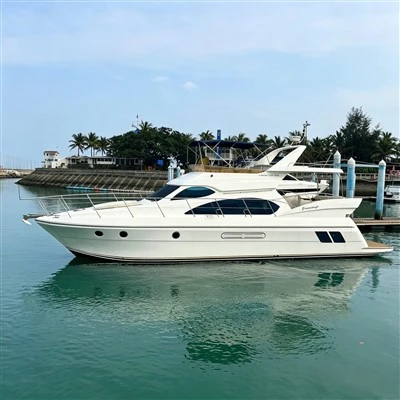
If you’re in the market for a boat that can handle trawling, or you’re still not sure if a trawler is right for your needs, we’re here to help. We can walk you through the specs, answer questions about size, range, and gear, and find the right trawler that fits your budget and fishing goals. Don’t waste time on a fishing boat that’s not built for the job—reach out to us to talk through your needs, and we’ll make sure you get a vessel that works for you.
Trawlers References
- United Nations Food and Agriculture Organization. (2021). Trawl Fisheries: Design, Operations, and Sustainability. Rome: FAO Fisheries and Aquaculture Department.
- BoatUS Foundation. (2022). Boating Basics: Types of Commercial Fishing Vessels. Washington, DC: BoatUS Foundation for Boating Safety and Clean Water.
- National Oceanic and Atmospheric Administration (NOAA). (2020). Fishing Vessel Classification and Gear Design. Silver Spring, MD: NOAA Fisheries Office of Science and Technology.
- International Maritime Organization (IMO). (2019). Safety of Fishing Vessels: Trawler-Specific Requirements. London: IMO Maritime Safety Committee.
Longkou Jinda Shipping Co., Ltd.
With abundant experience, we are one of the most professional trawlers manufacturers and suppliers in China. Please feel free to buy high quality trawlers made in China here from our factory. We also accept customized orders.
Address: North of Shuangyu Village, Xingjia Sub-district, Longkou City, Yantai City, Shandong Province
E-mail: leven@jindaship.com
WebSite: https://www.jindaship.com/
